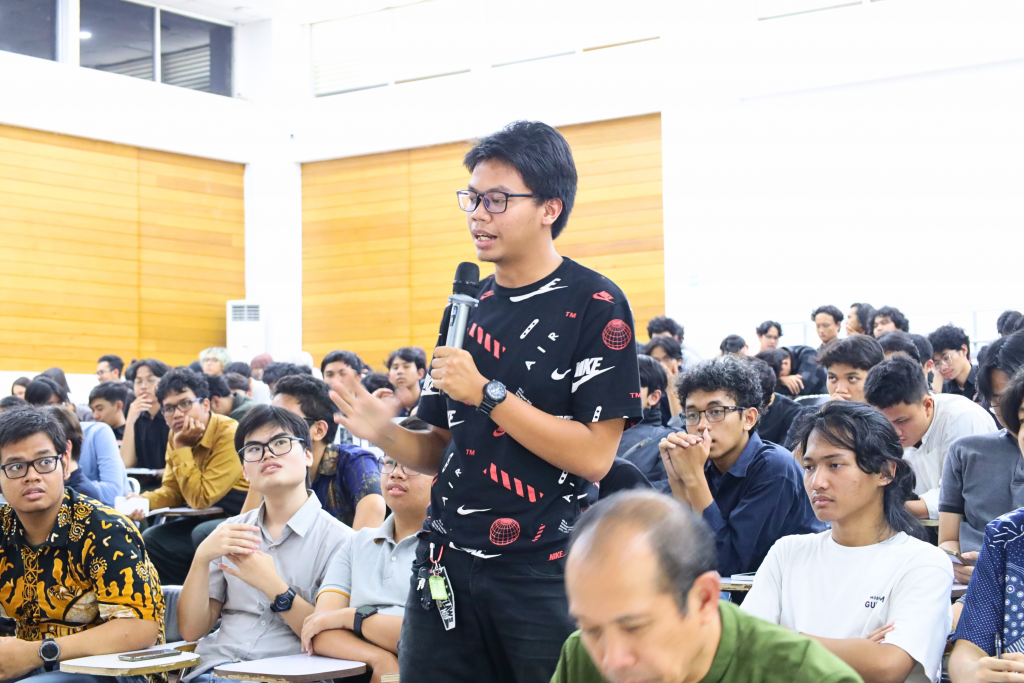
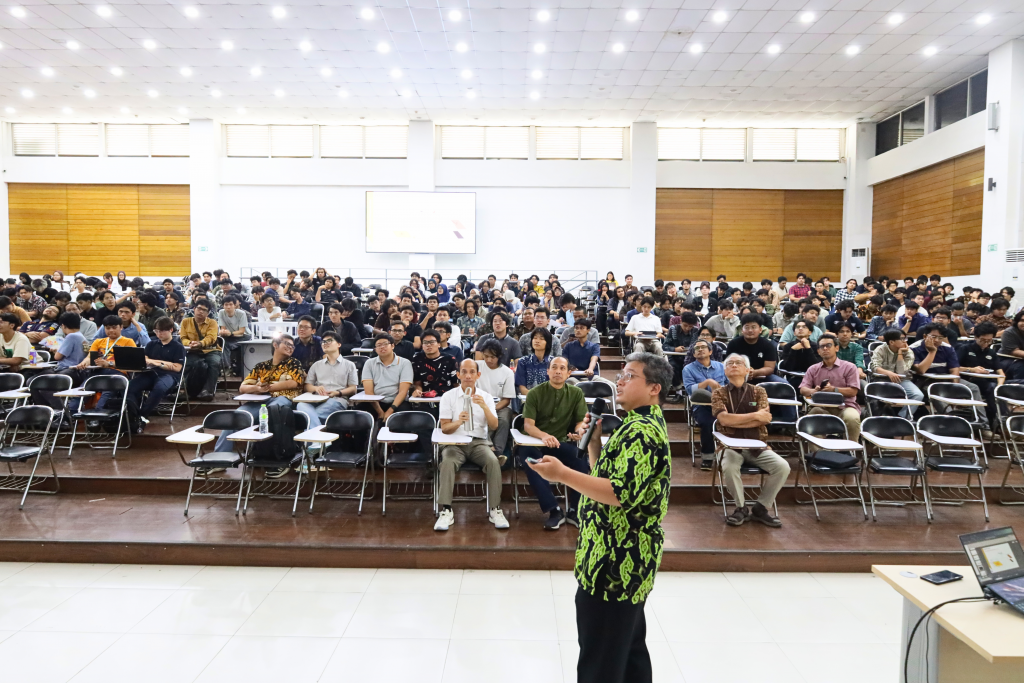
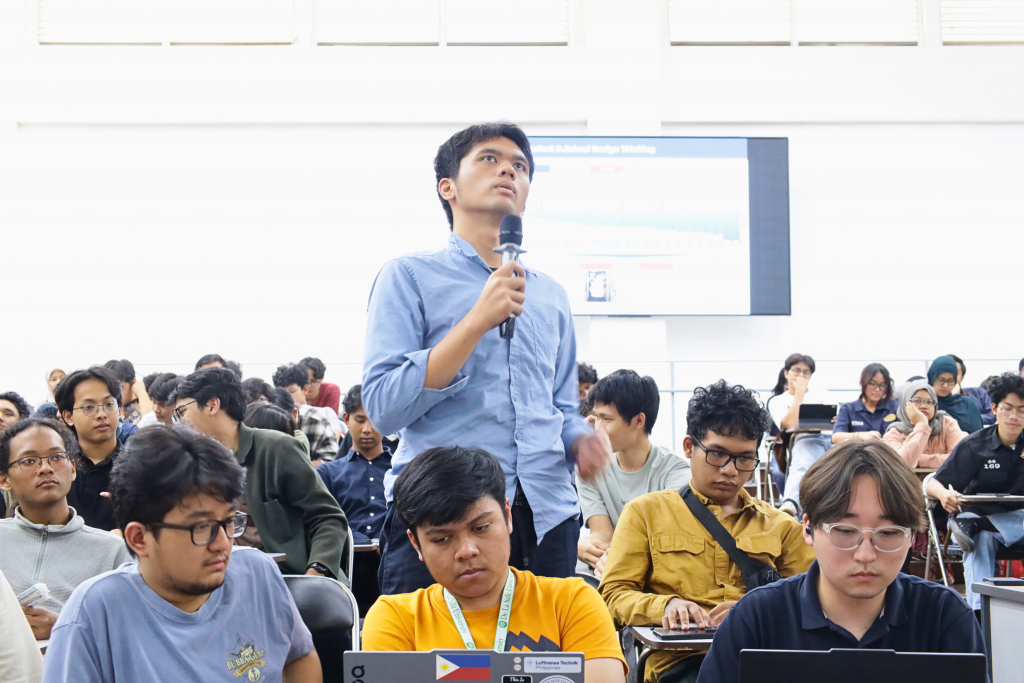
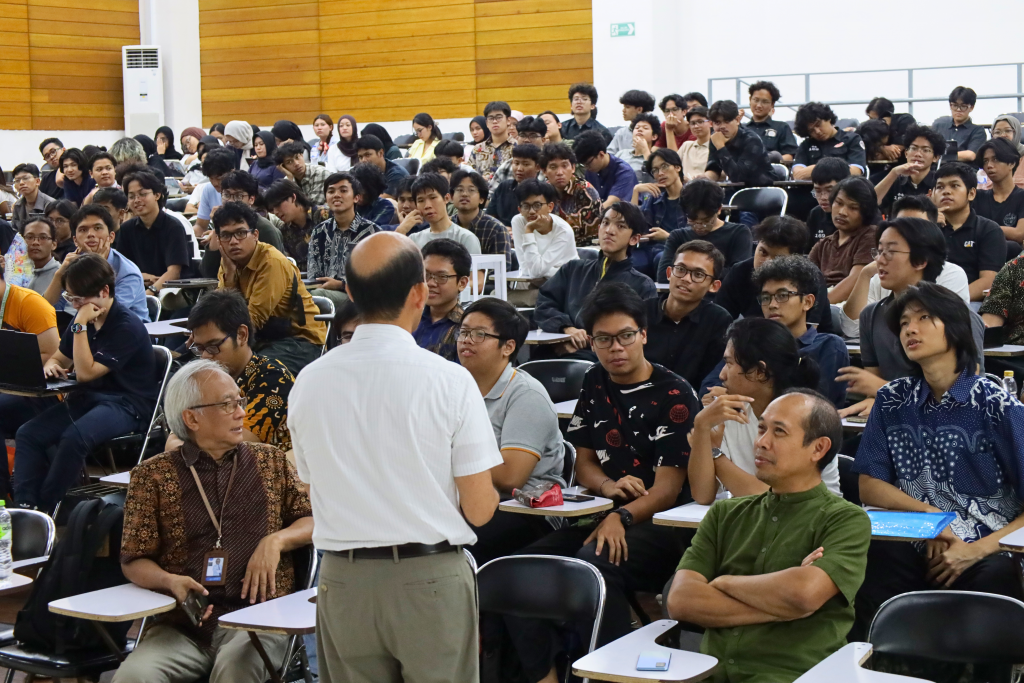
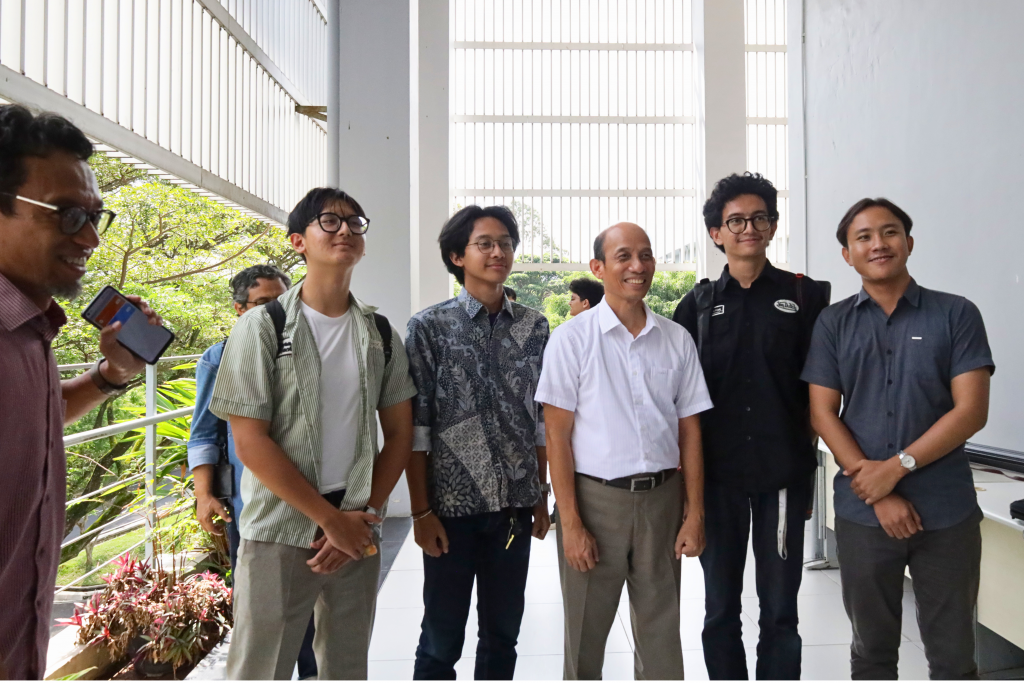
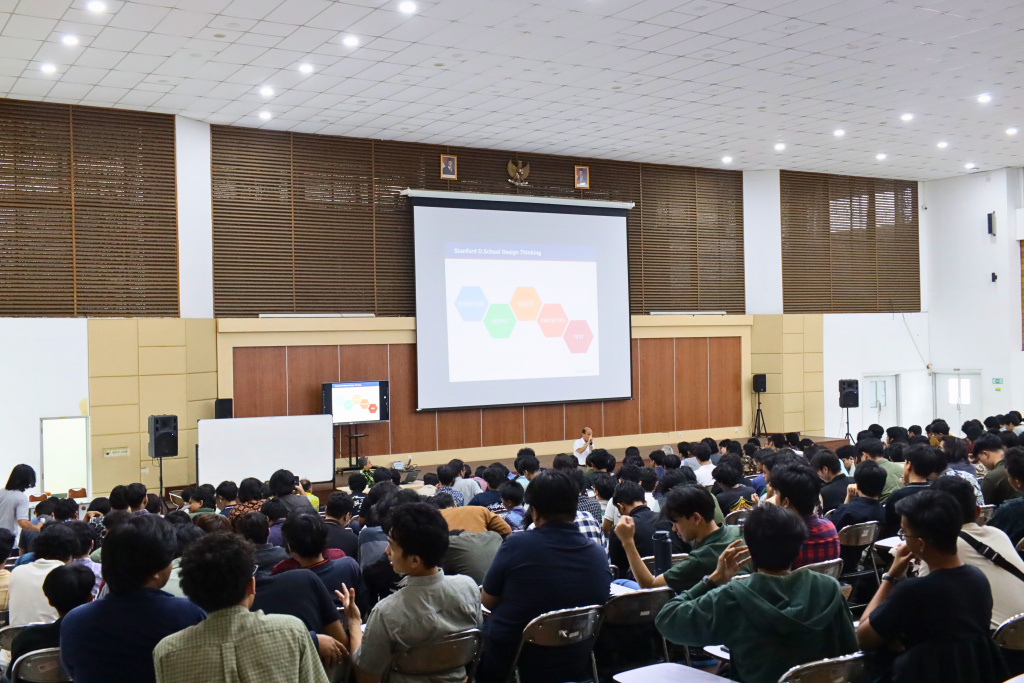
Jatinangor – The Faculty of Mechanical and Aerospace Engineering (FMAE/FTMD) at Institut Teknologi Bandung (ITB) hosted a guest lecture titled Lesson from Industry: “Design Thinking Process of Buoyant Tower” on Wednesday, April 15, 2026, at the GKU 2 Building, ITB Jatinangor Campus. The event featured Arcandra Tahar, M.Sc., Ph.D., who served as the Vice Minister of Energy and Mineral Resources of the Republic of Indonesia from 2016 to 2019.
The lecture was specifically designed for first-year students to strengthen their understanding of the engineering design process, which will be applied in their major projects. During the session, Dr. Arcandra shared his industrial experience regarding the technological development of the Buoyant Tower using the design thinking approach pioneered by the Stanford D.School.
In his presentation, Dr. Arcandra detailed the stages of design thinking—
empathize, define, ideate, prototype, and test—using a case study on the development of Buoyant Tower technology for offshore drilling and production facilities.
In the
Empathize stage, he addressed real-world industrial challenges in offshore facility development. The designed system must be relocatable if necessary, remain safe under extreme conditions such as major earthquakes, and be constructible within a limited timeframe. Furthermore, installation methods must be efficient, requiring minimal vessel support. Factors such as relatively shallow water depth, moderate production capacity, and cost-efficiency were also primary considerations.
Moving to the
Define and Ideate stages, a solution was formulated by merging two existing technologies: the Cell Spar and the Compliant Tower, which gave birth to the Buoyant Tower concept. The Cell Spar offers a simple and easy-to-manufacture design, while the Compliant Tower provides enhanced stability due to its seabed connection. The combination resulted in a system that is both more flexible and highly efficient.
During the
Prototype stage, it was explained that the Buoyant Tower is a structure anchored to the seabed for drilling and production in shallow waters. This technology offers several advantages, including portability, flexibility for various production needs, and the capacity for integrated oil storage. Additionally, construction costs are relatively lower as it eliminates the need for extra facilities like storage tankers and can be developed using local resources.
Finally, in the
Test stage, rigorous simulations were conducted using engineering software such as ANSYS and ABAQUS. This analysis utilized soil condition data to ensure the design was stable and safe. The results demonstrated that the Buoyant Tower design provides excellent vertical, horizontal, and rotational stability, ensuring optimal performance in the field.
Through this event, students gained valuable insights into the application of design thinking within the energy industry. They learned how a systematic engineering approach produces relevant and applicable solutions. This learning experience is expected to help students develop a more structured mindset for their upcoming academic projects.
Through its Lesson from Industry initiative, FTMD ITB continues to provide learning experiences that bridge classroom theory with real-world industrial practice, ensuring students are better prepared to face challenges in the fields of mechanical and aerospace engineering.