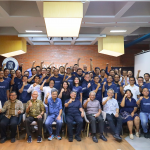
The Faculty of Mechanical and Aerospace Engineering (FTMD) at Institut Teknologi Bandung (ITB) continues to strengthen its contribution to community development through a community service (PKM) initiative titled “Intensification of Portable Fish Aggregating Device and Fishing Gear Technology Application to Increase Catches for Kabetan Village Fishermen”. Funded by the Directorate of Community Service and Expert Services (DPMK) ITB through the Fostered Village Community Service Program, this project is being carried out from October 2025 to July 2026, focusing on Kabetan Village, Toli-Toli Regency, Central Sulawesi.

The program is led by Dr. Ir. Sri Raharno, S.T., M.T. from the Engineering Design and Production Research Group at FTMD ITB, alongside Indria Herman, S.T., M.T., Ph.D., with the support of students Suryandaru Martawirya (Doctoral Program in Mechanical Engineering) and Fathurrahman Ramadhan Kusuma (Undergraduate Program in Mechanical Engineering). This initiative is also executed in collaboration with Dr. Roza Yusfiandayani, S.Pi. from the Department of Fisheries Resources Utilization, Faculty of Fisheries and Marine Sciences, IPB University.

Kabetan Village is an island community where most residents rely on the capture fisheries sector for their livelihood. Despite its vast marine resource potential, local fishermen still face various challenges, including the use of traditional fishing technologies, limited energy access, and low productivity in catching high-value economic fish. These conditions prompted FTMD ITB to introduce a technological solution that not only boosts fishermen’s yields but also supports a more sustainable development for coastal communities.

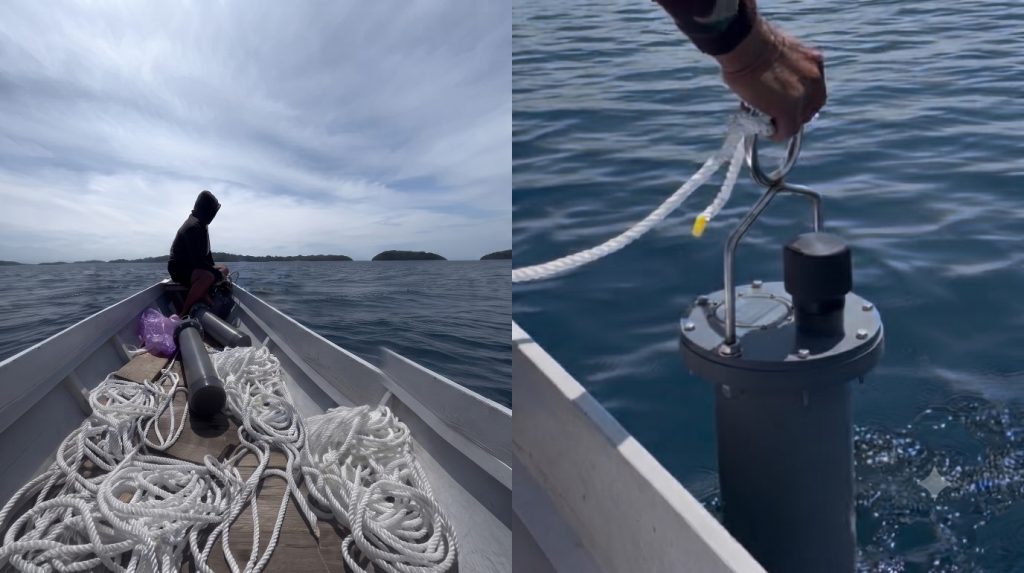
One of the primary focuses of the program is the development of a portable fish aggregating device (FAD) based on sound attractors, co-developed by ITB and IPB University. This technology is designed to help gather pelagic fish around fishing areas, thereby increasing the fishermen’s chances of obtaining higher-value catches. Furthermore, the FAD’s design has been optimized to operate at depths of up to 30 meters and is engineered to be easily maintained by the local community.

Prior to its deployment in Kabetan Village, the portable FAD was validated through field testing in Indramayu waters. The test results indicated that using the device successfully increased catches and enriched the variety of fish caught compared to fishing methods without FAD assistance. This validation process also provided critical technical insights used to refine the design before transferring it to the fishing community.

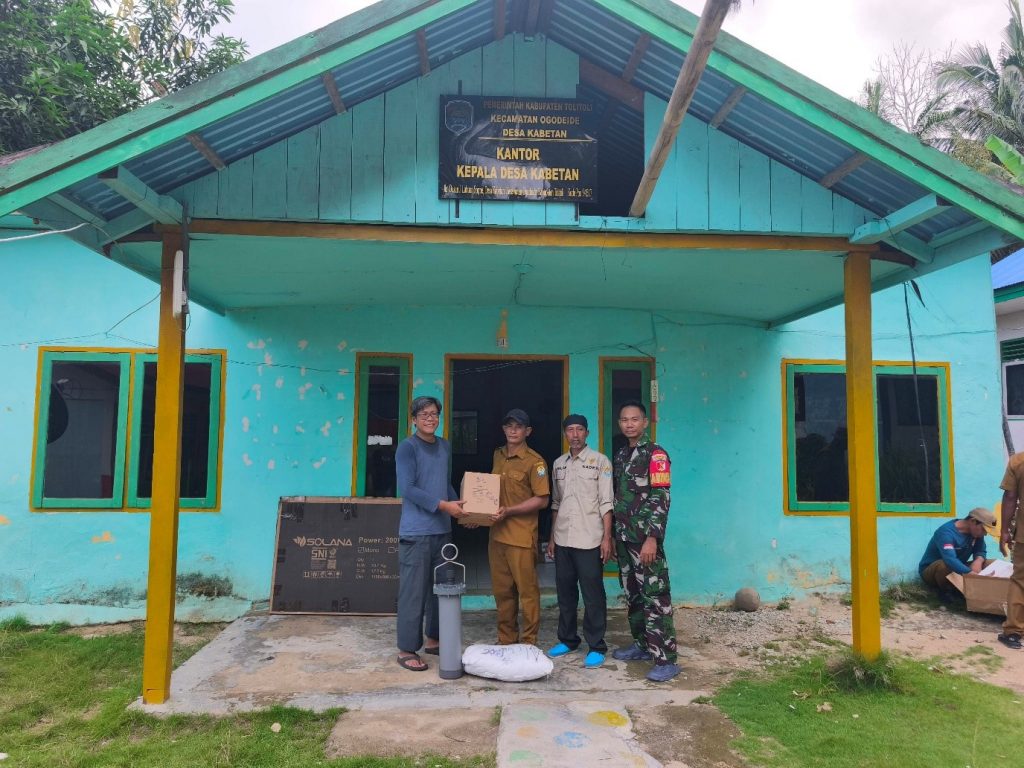
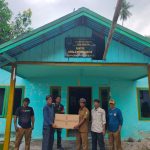
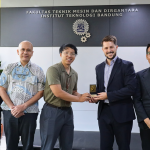
As part of the program implementation, the FTMD ITB team conducted field activities in Kabetan Village from June 22 to 26, 2026. These activities included the handover of fishing facilities, technology implementation, training on portable FAD usage, and mentorship for local fishermen groups.

During the event, the team handed over various forms of assistance to the community and fishermen groups of Kabetan Village, consisting of:

  • 6 units of sound-attractor-based portable FADs
  • 23 packages of monofilament gill nets
  • 10 packages of handline fishing gear
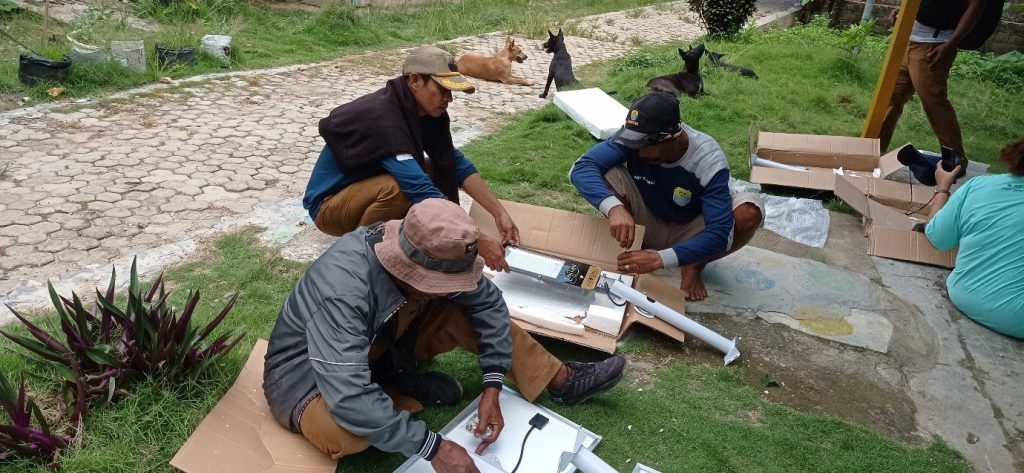
  • 5 units of solar-powered streetlights

The handover of this assistance is part of an effort to increase fishermen’s productivity while reinforcing supporting infrastructure for the village community. The gill net and handline packages are expected to help fishermen improve their fishing effectiveness, while the solar-powered streetlights are intended to elevate the community’s quality of life by providing better lighting across the village environment.

In addition to equipment distribution, the team also conducted training sessions on the installation, operation, and maintenance of the portable FADs, as well as the use of more selective and responsible fishing gear. This mentorship is designed to ensure that the introduced technology can be utilized optimally and sustainably by the community.

This program is part of ITB’s continuous commitment to assisting Kabetan Village. Previously, ITB had carried out various community service activities, including the procurement of fishing gear, village electrification, and technology integration to support community food security. Through sustainable programming, ITB strives to build solutions that not only address short-term needs but also strengthen long-term community independence.

Contribution to the Sustainable Development Goals (SDGs)

This activity aligns with ITB’s commitment to supporting the achievement of the Sustainable Development Goals (SDGs) through technological innovation and community empowerment.

🟧 SDG 1 – No Poverty

Increasing fishing productivity through the deployment of portable FADs and the provision of fishing gear is expected to enhance fishermen’s income and strengthen the economic resilience of coastal households.

🟨 SDG 2 – Zero Hunger

Higher fish yields support the availability of nutritious food sources for the community while strengthening food security and nutritional resilience in Kabetan Village.

🟩 SDG 7 – Affordable and Clean Energy

The provision of solar streetlights demonstrates the utilization of renewable energy to support the community’s quality of life, particularly in island regions that still face limited access to electrical power.

🟦 SDG 14 – Life Below Water

The implementation of portable FADs and the use of more selective fishing gear support sustainable fishing practices and responsible marine resource management.

Technological Innovation for the Community

This project demonstrates how engineering and technology can be applied to meet the real needs of society. Through collaboration among FTMD ITB, IPB University, the Kabetan Village Government, and the local fishing community, this program not only produces technological innovations but also builds local capacity to utilize the technology independently and sustainably.

Moving forward, the portable FAD technology and mentorship model developed in this program are expected to be replicated in other coastal villages and island regions across Indonesia facing similar challenges. Consequently, the benefits of appropriate technological innovations can be felt by a wider community while supporting the global sustainable development agenda.

Implementation Team

  • Dr. Ir. Sri Raharno, S.T., M.T. (Project Leader)
  • Indria Herman, S.T., M.T., Ph.D.
  • Suryandaru Martawirya (Doctoral Student in Mechanical Engineering)
  • Fathurrahman Ramadhan Kusuma (Undergraduate Student in Mechanical Engineering)

Partner

  • Dr. Roza Yusfiandayani, S.Pi. (Department of Fisheries Resources Utilization, Faculty of Fisheries and Marine Sciences, IPB University)

Tagline

Engineering Technology, Empowering Communities, Supporting Sustainable Development Goals.