FTMD ITB Presents Prof. Takahiro Kondo to Discuss Global Materials Research for Carbon Neutrality
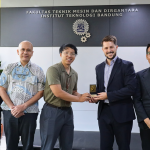
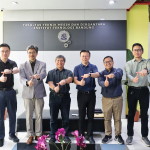
Bandung – The Faculty of Mechanical and Aerospace Engineering (FTMD) of Institut Teknologi Bandung (ITB) held a public lecture as part of the Visiting Academic Leader program on Tuesday (January 20, 2026) with the topic “Fundamental Research on Materials for Carbon Neutrality.” The lecture was delivered by Prof. Dr. Takahiro Kondo from 9:00 a.m. to 11:00 a.m. Western Indonesian Time in the Co-Working Room on the 1st Floor of FTMD ITB.
Prof. Dr. Takahiro Kondo is a Professor at the University of Tsukuba and Director of the Hydrogen Boride Research Center. He is known as a leading researcher in surface science, nanomaterials, and chemical physics, with numerous publications in journals such as Science, Nature Communications, Nature Chemistry, and the Journal of the American Chemical Society.
In the public lecture, Prof. Kondo demonstrated how fundamental materials research plays a crucial role in achieving the global carbon neutrality target. He emphasized that researchers must deeply understand materials at the atomic and molecular level to enable the transition to a sustainable energy system.
“Carbon neutrality will not be achieved simply through policy changes. Breakthroughs in fundamental materials research are key to producing truly effective clean energy technologies,” said Prof. Kondo.
He explained various research topics currently under development, including materials for hydrogen storage and transportation, hydrogen production, and hydrogen utilization as a clean energy source. Furthermore, Prof. Kondo also reviewed the mechanism of methanol synthesis from CO₂ on a copper (Cu) surface as a promising approach to carbon conversion.
One of the main focuses that captured participants’ attention was the development of two-dimensional boron-based materials, such as hydrogen boride (HB) and boron monosulfide (BS) nanosheets. Prof. Kondo explained that these materials have great potential for catalysis, gas sensing, and CO₂ adsorption and conversion.
“Two-dimensional boron-based materials exhibit unique electronic and chemical properties, making them highly promising for future energy and environmental applications,” he explained.
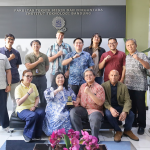
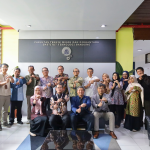
This public lecture was conducted interactively, with a discussion session involving lecturers, researchers, and students from the Faculty of Mechanical and Aerospace Engineering (FTMD) ITB. Various questions were raised regarding opportunities for international research collaboration, challenges in developing sustainable materials, and the potential to scale up fundamental research findings to the industrial scale.

Through this Visiting Academic Leader activity, FTMD ITB hopes to strengthen the academic and research atmosphere while also opening up opportunities for strategic collaboration with international institutions to develop advanced materials that support the carbon neutrality and sustainable development agenda.