Scientific Oration by Prof. Rachman Setiawan Discusses “Engineering Design within the Framework of Engineering Product Life Cycle”
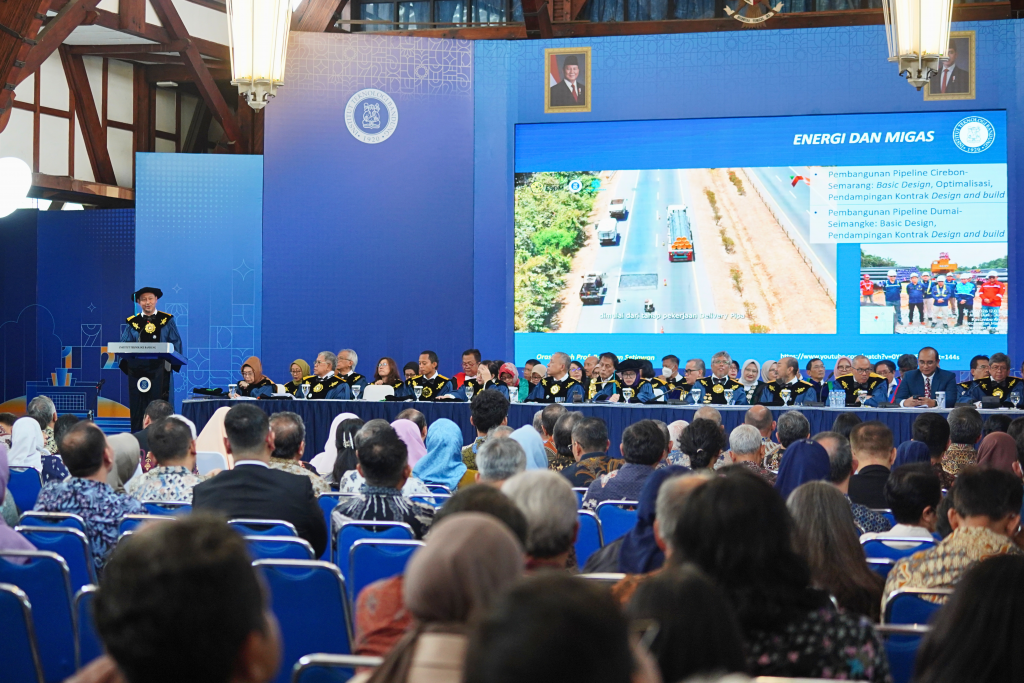
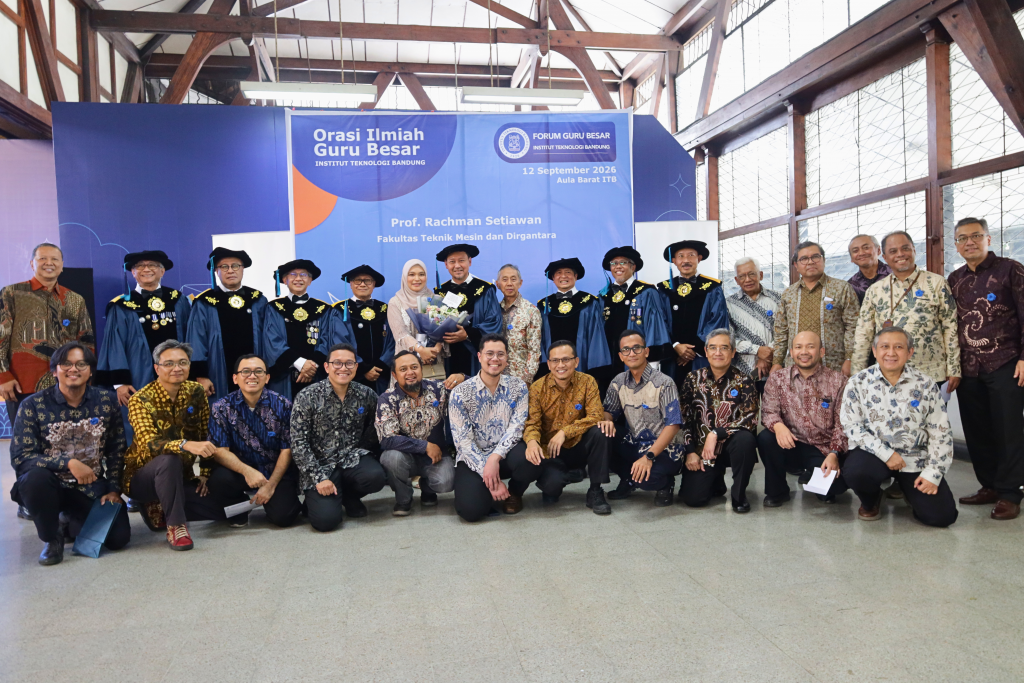
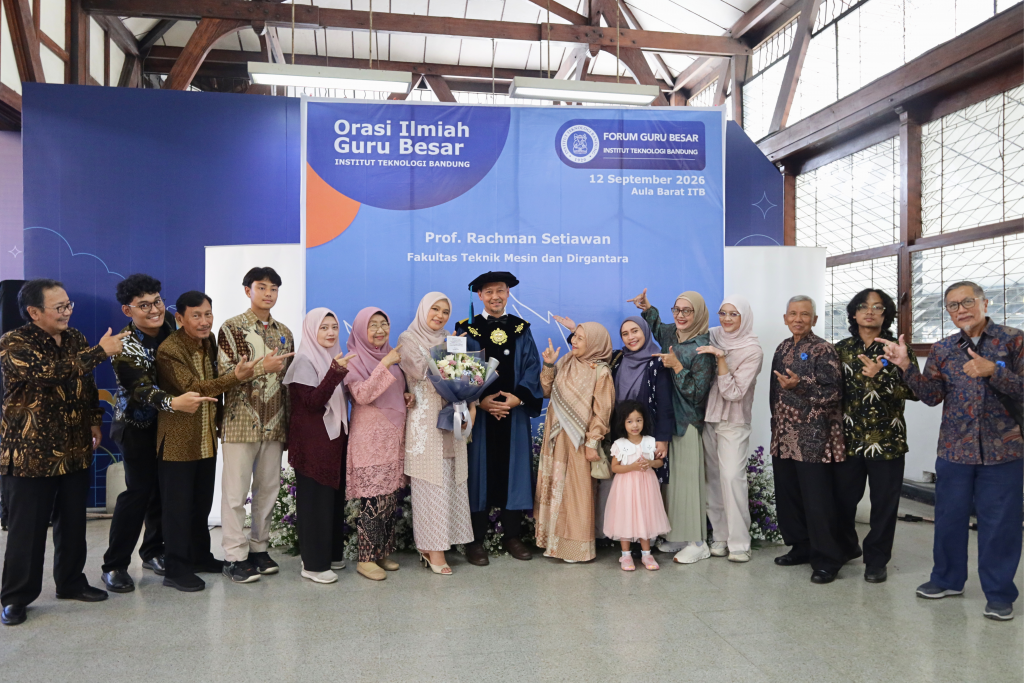
BANDUNG, ftmd.itb.ac.id – Institut Teknologi Bandung (ITB) hosted the Scientific Oration of Prof. Ir. Rachman Setiawan, S.T., M.Sc., Ph.D., IPM., from the Design and Production Research Group. Carrying the theme “Engineering Design within the Framework of Engineering Product Life Cycle (Perancangan Teknik dalam Kerangka Siklus Hidup Produk Rekayasa)”, the event took place on Saturday (September 12, 2026) at the ITB West Hall, Ganesha Campus.
In his address, Prof. Rachman explained that engineering design is the process of generating system, process, product, or component designs by utilizing science, mathematics, and engineering principles to meet specific needs. According to him, this process must be viewed holistically, as an engineering product undergoes an extensive journey—from initial planning to the end of its service life.
One of the approaches developed by Prof. Rachman is a knowledge-based design optimization methodology. This approach utilizes data from simulations and testing, which are subsequently modeled using surrogate models and Artificial Neural Network methods. Its application has been implemented across various fields, including composite materials, braking systems, train crashworthiness, battery impact absorbers, and turbines.
In line with technological advancements, this approach continues to be expanded through Explainable Machine Learning and Generative Design to support data-driven design processes.
Design within the Framework of Asset Life Cycle
In his oration, Prof. Rachman also introduced the concept of Asset Life Cycle, a perspective that treats engineering products or components as assets expected to deliver value—whether in the form of revenue, safety, environmental consideration, or comfort.
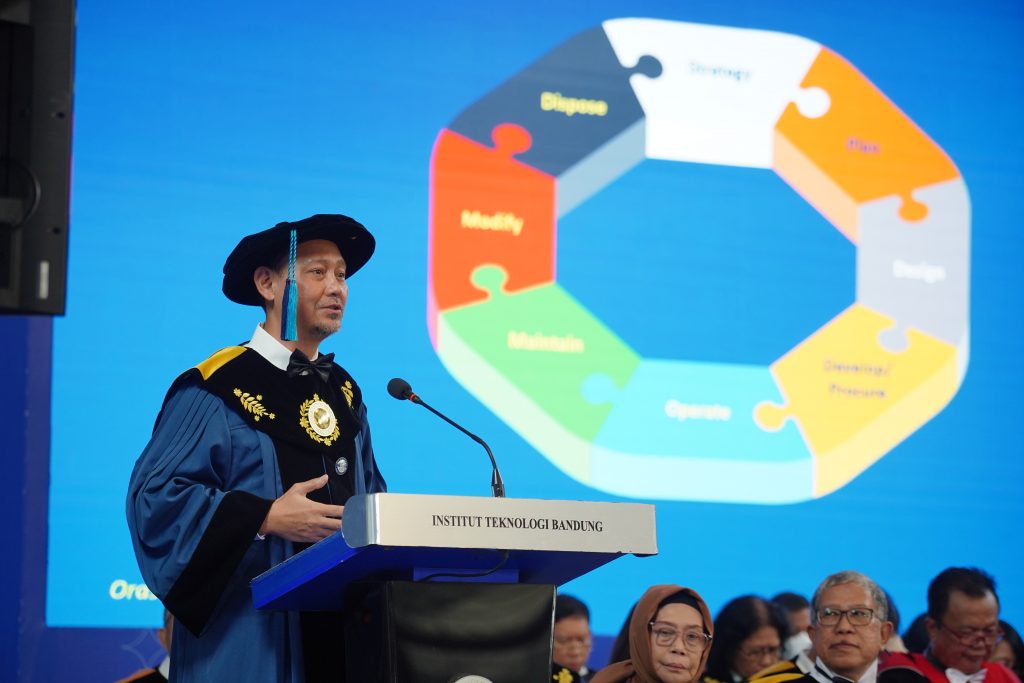
This cycle encompasses:
Plan → Design → Develop/Procure → Operate → Maintain → Modify → Dispose → Strategy
Through this approach, decisions made during the design phase consider not only how a product is manufactured, but also how it will be operated, maintained, and extended in service life until reaching the end of its technical lifespan.
Prof. Rachman has applied this concept across multiple sectors. In the energy and oil & gas sectors, applications include the design and technical support of geothermal facilities as well as pipeline construction. In mining and mineral processing, applications range from the development of bucket wheel dredgers to coal upgrading technology.
Meanwhile, in manufacturing and transportation, initiatives cover the development of the Metro Kapsul, train structural materials, composite brakes, gear cases, and the optimization of railway rolling stock maintenance systems.
Prof. Rachman emphasized that efforts to extend an asset’s service life must uncompromisingly preserve safety and reliability.
“When we want to extend the life cycle, we must ensure that safety and reliability cannot be compromised. We achieve this through comprehensive assessment and testing.” he explained.
Safety and Reliability as Integral Components of Design
Safety is a critical element in engineering design. Prof. Rachman explained the implementation of passive safety systems through crashworthiness technology, which aims to minimize consequences when accidents occur.
In the railway sector, he was involved in formulating SNI 8826, which references BS EN 15227. Key principles considered include the use of anticlimbers to prevent overriding, crash-energy management structures, and robust passenger compartment areas.
In addition to safety, reliability plays a vital role in asset management. One example presented was the development of maintenance strategies based on Reliability Centered Maintenance II (RCM II) using a multi-objective optimization approach. This method is directed at enhancing reliability while managing maintenance costs.
“We must be able to optimize so that one aspect is not sacrificed for another.”
For critical assets, this approach has also been expanded through the Equipment Health Score (EHS) concept in collaboration with PT Pertamina Patra Niaga. EHS is used to represent the health condition or degradation level of equipment and can be further developed toward the concept of Asset Readiness.
Connecting Education with Industry Needs
The concept of asset life cycle has also been integrated into education through the Professional Master’s Program in Operation and Maintenance at FTMD, developed in collaboration with partners such as PT Kereta Api Indonesia, PLN, and Komatsu.
This program is structured so that students do not merely study theory, but also solve real field challenges through master’s theses or projects. The curriculum covers research methodology, data analytics, operational optimization, reliability, mechanical system maintenance and inspection, and risk-based asset management.
This educational initiative aligns with Prof. Rachman’s collaborative network, which spans over 80 domestic and international institutions, including Komatsu, PT KAI, PT INKA, KTH Royal Institute of Technology, University of Nottingham, Cranfield University, Southwest Jiaotong University, BKSTM, and the National Standardization Agency of Indonesia (BSN).
Dedication to Education, Research, and Academic Service
Throughout his career, Prof. Rachman has taught 11 undergraduate courses and 5 master’s courses, led research funded by ITB as well as domestic and international funding bodies, and authored 1 patent, 40 international publications, and 25 national publications.
In terms of mentorship, he has supervised 103 undergraduate graduates, 47 master’s graduates, 2 doctoral graduates, and 40 Professional Engineer program graduates. Additionally, Prof. Rachman received the Satyalancana Karya Satya 10 Years Award and the Best Paper Award in the Journal of Science and Technology in 2011.
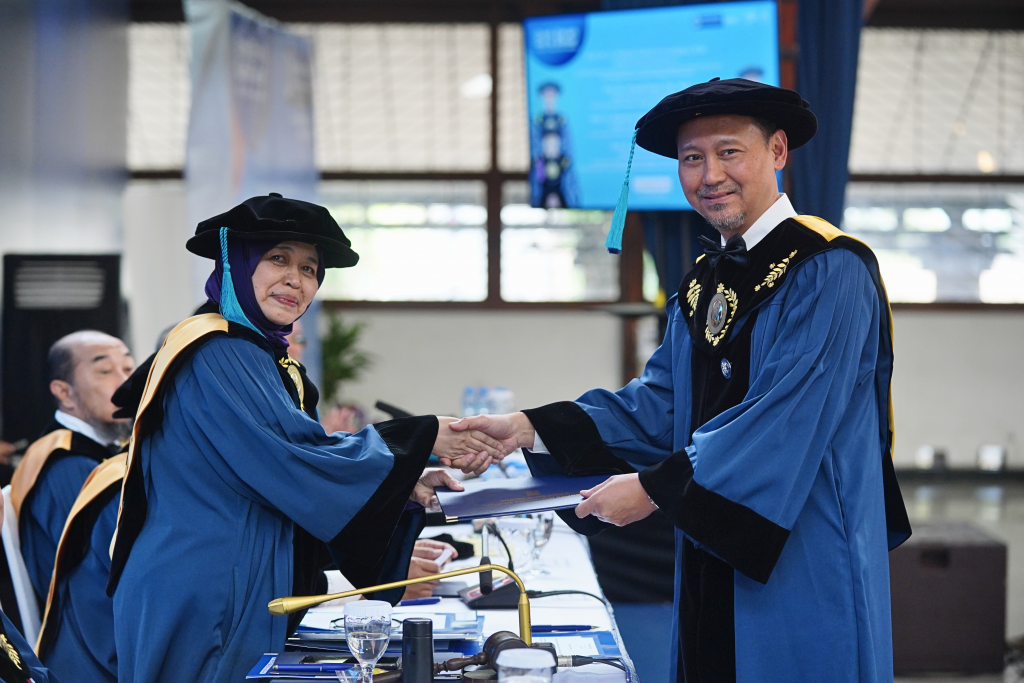
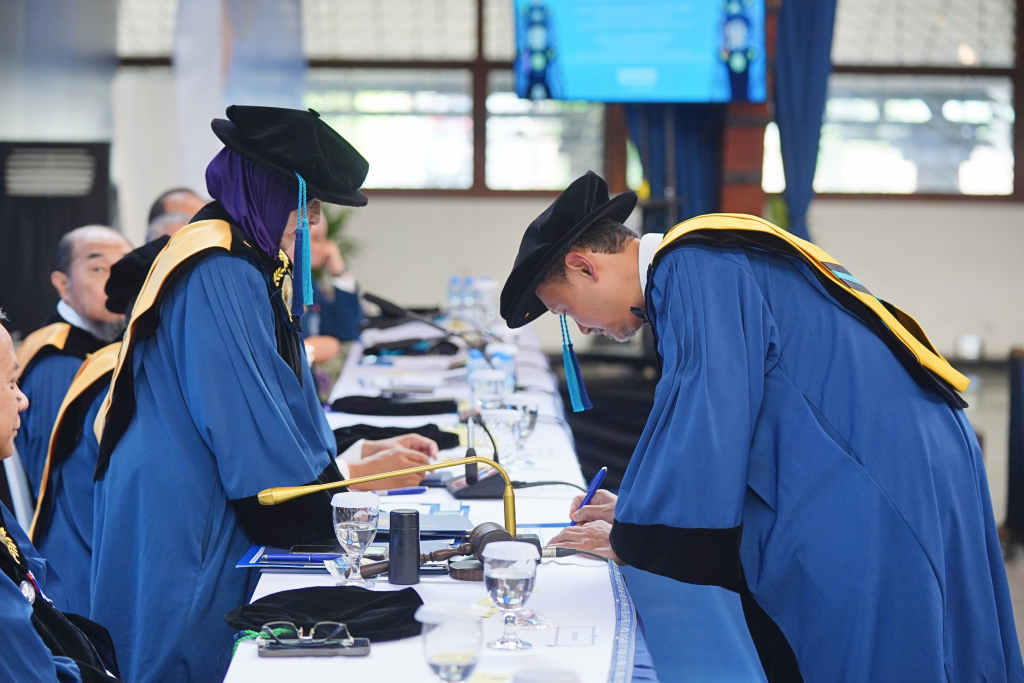
Closing his scientific oration, Prof. Rachman expressed his appreciation to all parties who have supported his academic and professional journey—including members of the university community, domestic and international institutions, and his beloved family. The event concluded with the reading of the code of honor.
Through this scientific oration, Prof. Rachman’s vision and experience are expected to continue offering valuable contributions to the advancement of science and technology, education, and industrial progress. The commitment to delivering engineering solutions prioritizing safety, reliability, and sustainability is also envisioned to inspire future generations to create and contribute to their alma mater, society, and the nation.