Prof. Gaetano Cascini’s Visit Opens Opportunities for Collaboration Between FTMD ITB and Politecnico di Milano
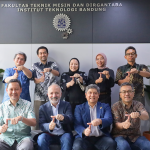
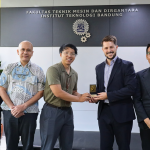
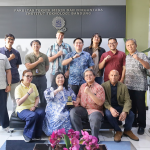
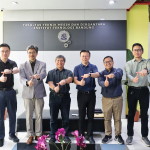
Bandung – The Faculty of Mechanical and Aerospace Engineering (FTMD) at Institut Teknologi Bandung (ITB) welcomed a visit from Prof. Gaetano Cascini from Politecnico di Milano (PoliMi), Italy, on Tuesday (14/7/2026). The meeting held within the FTMD ITB premises serves as an initial step in exploring academic and research collaboration between the two institutions, particularly in design innovation, Artificial Intelligence (AI), and engineering education.
This activity was part of Prof. Gaetano Cascini’s visit as an Adjunct Professor under the EQUITY Program organized by the Faculty of Visual Arts and Design (FSRD) ITB. The meeting was chaired by Ir. Rianto Adhy Sasongko, S.T., M.Sc., Ph.D., and attended by Etika Vidyarini, S.Ds., M.Ds., Ph.D. as the Activity Coordinator from FSRD ITB, Intan Prameswari, S.Ds., M.Ds., Ph.D. from FSRD ITB, as well as FTMD ITB faculty representatives, namely Prof. Ir. Rachman Setiawan, S.T., M.Sc., Ph.D.; Dr. Ir. Yazdi Ibrahim Jenie, S.T., M.T.; Dr. Taufiq Mulyanto, S.T. DEA; and Dr. Abdul Hakim Masyhur, S.T., M.Sc., Ph.D.
On this occasion, Prof. Cascini introduced Politecnico di Milano, a leading Italian university focusing on Engineering, Architecture, and Design. In addition to housing a large body of students and doctoral researchers, PoliMi is supported by various flagship research facilities, including Italy’s largest wind tunnel used for testing civil engineering structures such as bridges and stadiums. This capacity is seen as opening up extensive collaborative opportunities in both research and human resource development.
The discussion then proceeded to various academic collaboration opportunities between FTMD ITB and Politecnico di Milano. Key topics included student exchange programs, research collaborations, and opportunities for joint doctoral degree programs. Both parties also discussed strengthening cooperation in engineering education to address the challenges of global technological advancements.
During the discussion session, Prof. Cascini explained that the utilization of Artificial Intelligence (AI) has become an essential component of both the learning process and research at Politecnico di Milano. AI is leveraged to assist students in exploring ideas, accelerating design processes, and generating innovative solutions across various engineering domains.
Furthermore, the discussion touched upon the implementation of Capstone Design as a course playing a vital role in engineering education. The course is considered effective in integrating knowledge acquired by students throughout their studies by solving real-world problems while supporting compliance with higher education accreditation standards.
Prof. Cascini also presented various research fields currently under his focus, including Biologically-Inspired Design, TRIZ, Patent Maps, Design for Circularity, and Multi-stakeholder Analysis. In the area of digital technology development, his research encompasses Mixed Reality for Collaborative Design, Machine Learning and Artificial Intelligence for Design Automation, Language Technologies for Patent Mining, and Agent Modeling. Meanwhile, regarding design evaluation aspects, the research covers Design Creativity Metrics, Design Protocol Analysis, Neuro-physiological Measurements, and Human Behavior.
As part of his itinerary at ITB, Prof. Cascini was also scheduled to deliver two public lectures at the Graduate Seminar Room, 3rd Floor CAD Building. The first lecture, titled “Designing for Human Performance: Enhancing Focus, Productivity, and Innovation in Complex Work Environment” was held on Wednesday, July 15, 2026, while the second lecture, titled “TRIZ” took place on Thursday, July 16, 2026. Through these events, ITB students and the academic community had the opportunity to gain insights into developments in design innovation and AI applications in engineering from an international expert.
At the conclusion of the meeting, both institutions agreed that further discussions are necessary to explore collaboration opportunities in greater depth. Several identified follow-up plans include formulating student exchange schemes, joint research, developing joint Ph.D. programs, and exploring research collaboration in AI for Design, TRIZ, Design Innovation, and Human-Centered Design.
Through this meeting, FTMD ITB reaffirms its commitment to expanding its international collaboration network with world-renowned universities. Synergy with Politecnico di Milano is expected to strengthen educational quality, expand collaborative research opportunities, and foster innovations that contribute to the advancement of science and technology.