FTMD ITB and Sakigake Japan Explore Collaboration in Developing PCM Technology for Fisheries and Renewable Energy
BANDUNG, ftmd.itb.ac.id – The Faculty of Mechanical and Aerospace Engineering (FTMD) at Institut Teknologi Bandung (ITB) is exploring collaboration opportunities with a Japanese company, Sakigake, in developing Phase Change Material (PCM) technology to support the fisheries sector and the utilization of renewable energy in Indonesia.
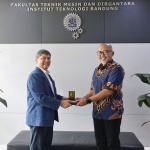
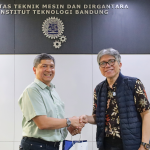
The meeting between representatives of FTMD ITB and Sakigake was attended by the CEO of Sakigake Japan, Munetoshi Kondoh, as well as FTMD ITB lecturers, Dr. Eng. Ir. Yuli Setyo Indartono, S.T., M.T. and Dr. Eng. Ir. Firman Bagja Juangsa, S.T., M.Eng. The discussion focused on the potential application of PCM technology as a more efficient energy storage and management solution, specifically to support the supply chain of fishery products in Indonesia.
PCM technology involves materials capable of absorbing, storing, and releasing thermal energy during the phase change process. This capability makes PCM a promising technology for energy-efficient and sustainable cooling systems. In the context of the fisheries sector, this technology has the potential to be used to maintain the temperature of fresh fish during the distribution process, ensuring that product quality is preserved until it reaches consumers.
Through this collaboration, both parties discussed the development of a PCM-based cooling system capable of maintaining temperatures down to -10°C. The system is expected to serve as a more efficient alternative to support the storage and distribution of fishery products, while helping to reduce post-harvest losses, which remain a challenge in various regions of Indonesia.
In addition to the development of cooling technology, the discussion also covered opportunities for integrating cold storage facilities with solar energy systems based on photovoltaic (PV) panels. This integration is expected to improve energy efficiency while reducing operational costs, particularly in coastal areas and remote regions that have limited access to a stable electricity supply.
This collaboration opens up opportunities to strengthen research and technology development activities oriented toward the needs of both industry and society. Through knowledge exchange, technical discussions, and the potential implementation of pilot projects, this cooperation is expected to generate innovations that are highly relevant to Indonesia’s specific conditions and needs.
Through this exploration of collaboration, FTMD ITB once again demonstrates its commitment to developing technological solutions that support sustainable development. The synergy between higher education and international industry is expected to produce innovations that not only strengthen the fisheries and renewable energy sectors but also contribute to sustainable economic and environmental development in Indonesia.