Venturing into the Bathyal Zone: BASSCAM, a Cross-Disciplinary Innovation by FTMD ITB Students for Deep-Sea Technology Self-Reliance
BANDUNG, ftmd.itb.ac.id – Behind the development of any technology, there is always a real-world problem waiting to be solved. This served as the starting point for BASSCAM (Bathyal Area Scouting Subsea Camera), an affordable visual underwater mapping device developed through a collaboration between the Faculty of Mechanical and Aerospace Engineering (FTMD) Institut Teknologi Bandung (ITB) and the Faculty of Earth Sciences and Technology (FITB) ITB.
BASSCAM emerges as a solution to the need for deep-sea visual documentation, which has long remained a challenge in Indonesian marine research. This project not only demonstrates the ability of FTMD students to apply engineering science to real-world problems, but also highlights the importance of cross-disciplinary collaboration in generating impactful innovation.
Originating from a Research Deadlock in Northern Bali
The idea to develop BASSCAM stemmed from marine geological research conducted to identify the traces of the Flores Fault in the waters north of Bali Island. During the study, researchers required visual evidence to validate seafloor mapping results obtained using sonar technology.
Hitherto, deep-sea exploration has heavily relied on imported sonar technology. Although capable of generating seabed topography or morphology data, such technology cannot provide a visual depiction of actual subsea conditions. Conversely, utilizing imported Remotely Operated Vehicles (ROVs) to acquire visual documentation entails exceptionally high costs, sometimes reaching billions of rupiah per day.
This situation sparked a cross-disciplinary engineering challenge: to develop an underwater vehicle capable of providing direct visual documentation, ensuring ease of operation, withstanding hydrostatic pressures of up to hundreds of meters, and remaining economical.
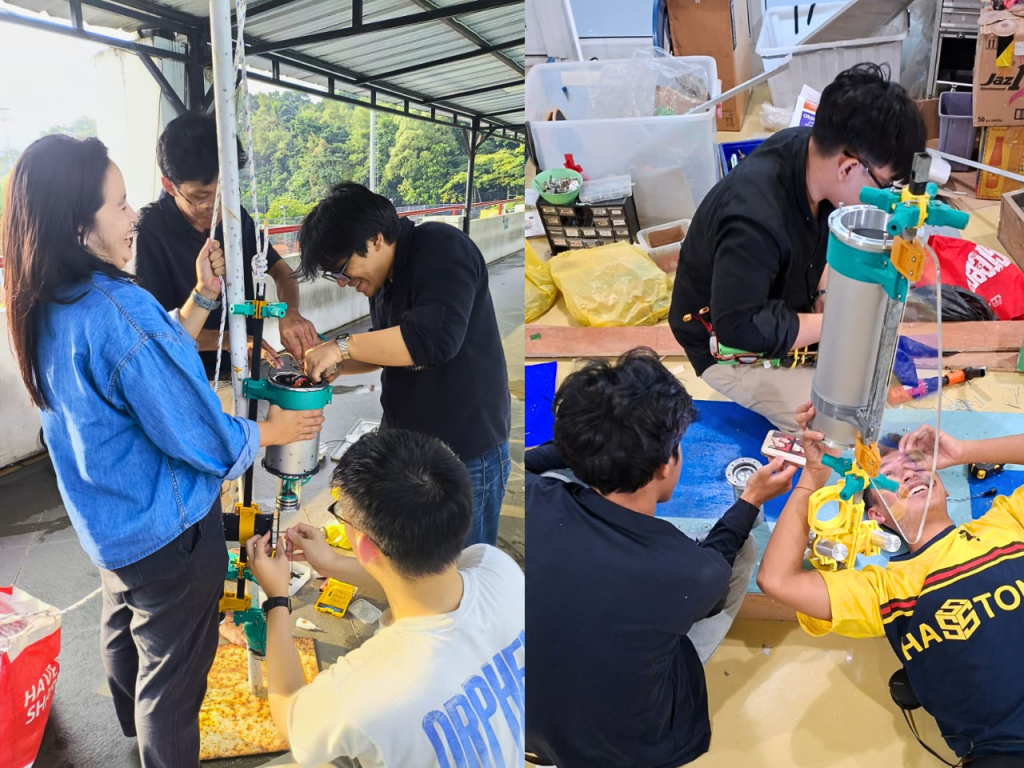
“BASSCAM was developed as a domestic product solution that is far more affordable yet robust enough to conduct direct visual observations in the bathyal zone (deep sea),” stated Gravin Hotasi Zakharia, an FTMD ITB Mechanical Engineering student responsible for the electrical systems and system integration of BASSCAM.
Cross-Disciplinary Collaboration as the Core of Development
The development of BASSCAM involved faculty members, students, and end-users from distinct academic disciplines, ensuring that every development stage directly addressed field requirements.
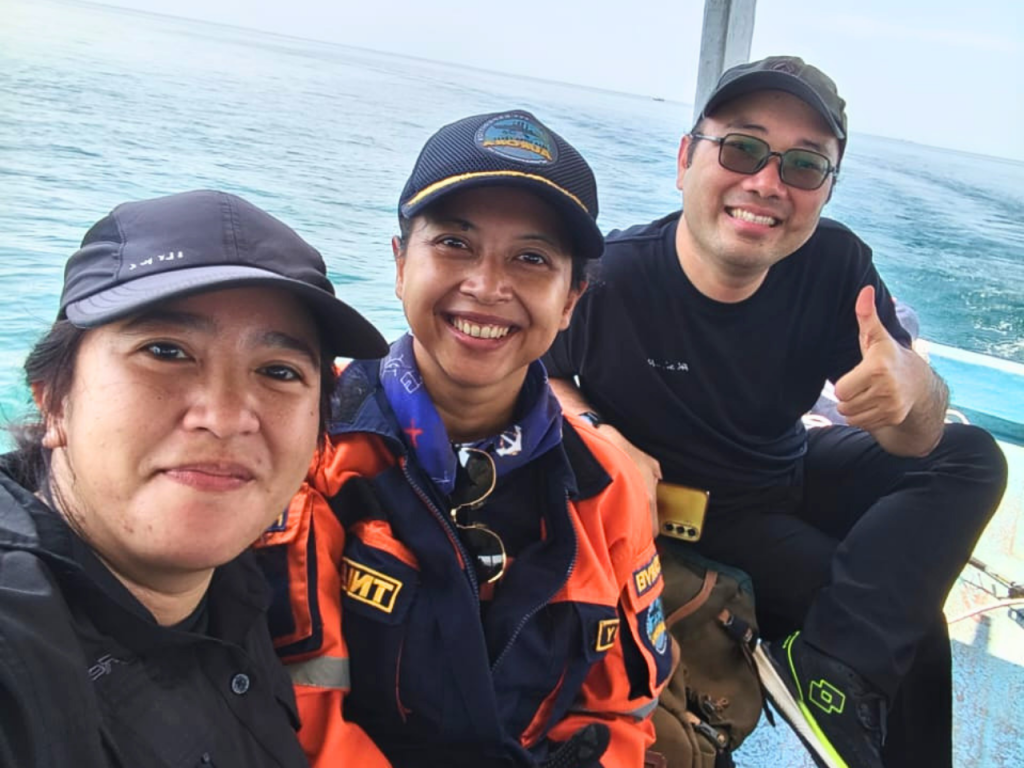
The project was led by Gabriella Alodia, S.T., M.Sc., Ph.D., an ITB Geodesy Engineering lecturer, who served as the initiator, project lead, and academic advisor. She conducted initial surveys regarding the need for underwater visual documentation technology in Indonesia, formulated BASSCAM use cases, and managed the overall project—spanning timeline formulation, progress control, partner collaboration, funding management, and patent registration for the invention.
As the main user, Anggraini Rizkita Puji, a doctoral student in Geological Engineering at ITB, provided case studies and real-world field requirements. BASSCAM was utilized to support her research in observing submarine earthquake fault lines around Bali Island.
Meanwhile, from FTMD ITB, Prof. Ir. Andi Isra Mahyuddin, Ph.D., and Dr. Eng. Ir. Ferryanto, S.T., M.T., served as academic advisors guiding students in applying the design thinking process while providing technical consultation on the entire BASSCAM system. This mentorship covered preliminary design, geometry optimization, structural material selection, structural strength analysis against hydrostatic pressure, and waterproofing systems.
The FTMD Students Team
The student team comprised Nicko Andreas, Marvin Pradipta, and Gravin Hotasi Zakharia, all of whom are undergraduate students in Mechanical Engineering at FTMD ITB.
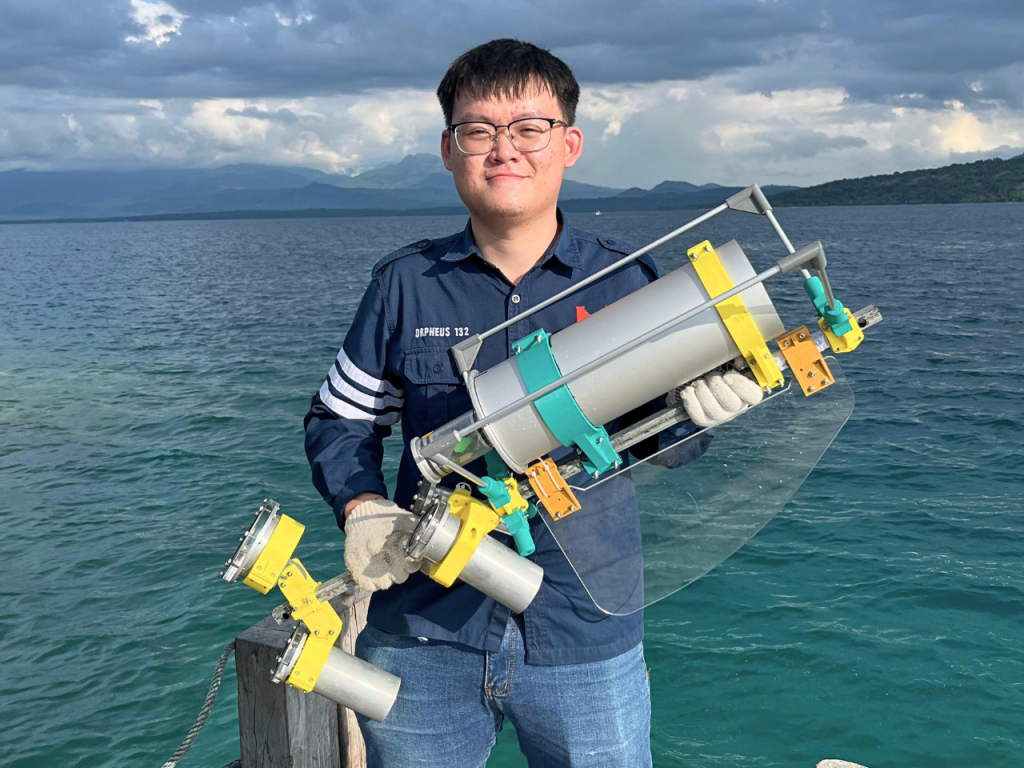
Nicko Andreas served as a Mechanical Design and Manufacturing Engineer. He was responsible for producing three-dimensional models of various BASSCAM components—ranging from the watertight housing to the frame mounts—and integrating these components into a unified system. Alongside Marvin, these designs were brought to life through various manufacturing processes, including benchwork, turning, milling, and 3D printing to yield components with complex geometries. Prior to deployment at sea, the fabricated housing underwent pressure and leakage resistance testing using a pressure chamber.
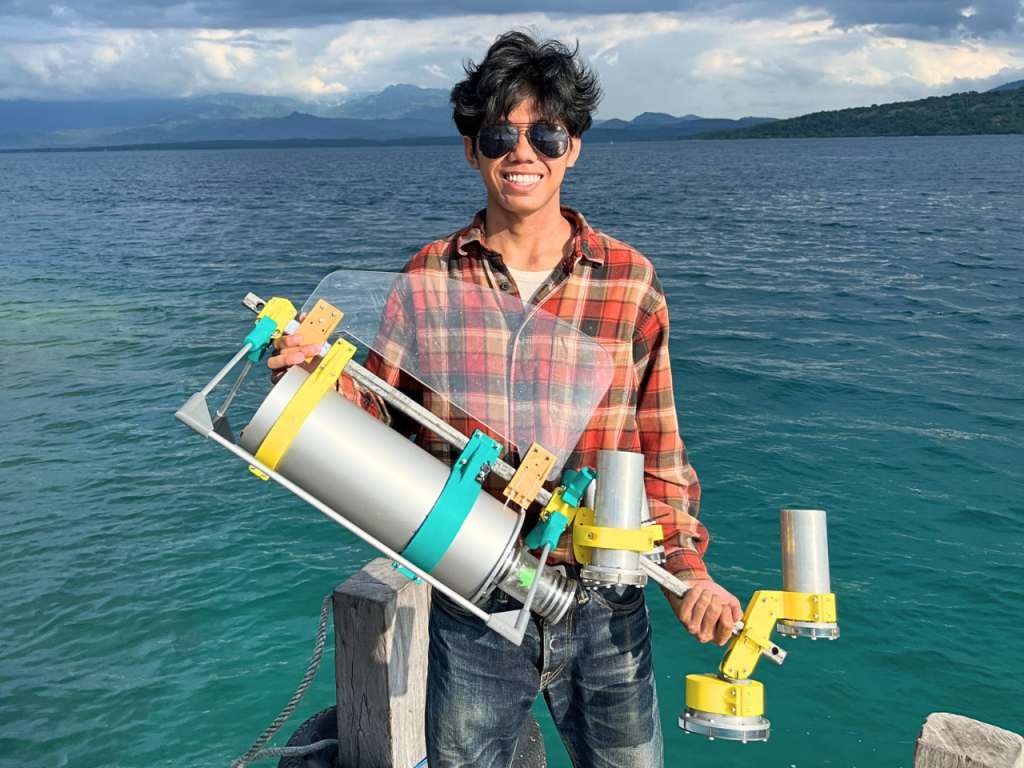
Marvin Pradipta also served as a Mechanical Design and Manufacturing Engineer, focusing on designing the housing structure capable of protecting all internal BASSCAM components at depths of up to 200 meters. In addition to manufacturing via turning, milling, laser cutting, and 3D printing, Marvin—together with Nicko—was responsible for conducting quality control across all produced components.
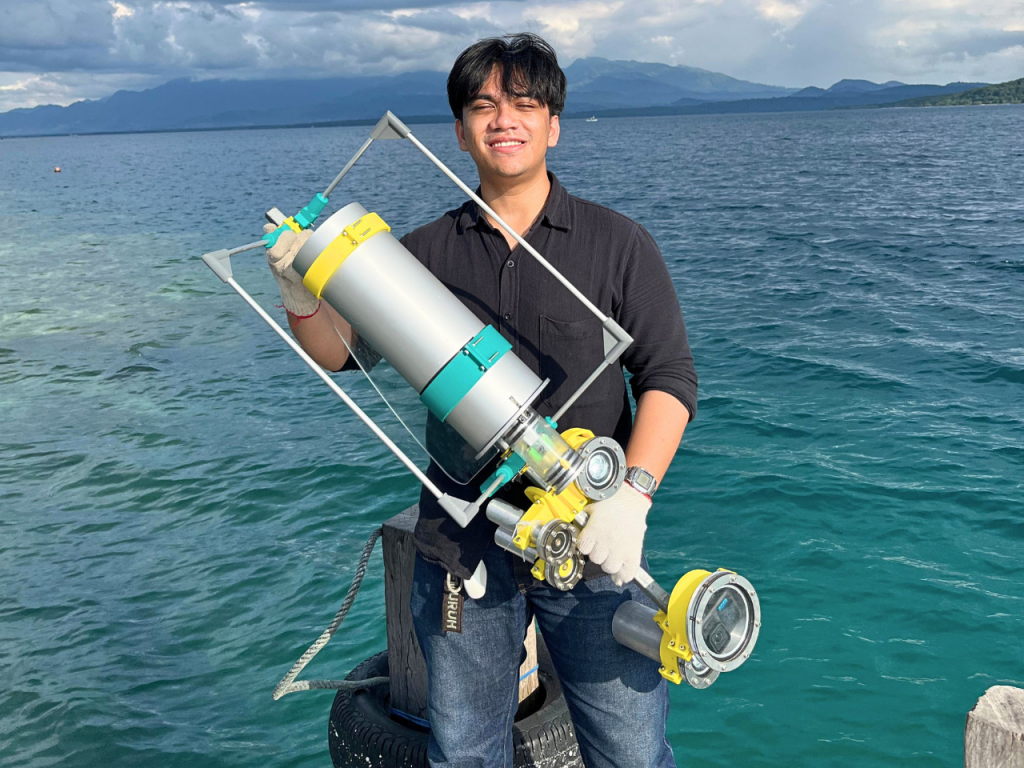
Meanwhile, Gravin Hotasi Zakharia served as an Electrical and Systems Engineer. He developed the complete BASSCAM electrical system, spanning the integration of depth sensors, IMUs, GPS, actuators (servos), navigation cameras (RaspiCAM), to a Raspberry Pi single-board computer serving as the system’s control center. He also developed a fiber-optic-based communication system enabling BASSCAM to be operated from the surface with low communication latency. Furthermore, Gravin developed software capable of real-time data acquisition and displaying all navigation information through a Human Machine Interface (HMI).
FTMD Student Engineering Touch
The entire BASSCAM development process was grounded in project management and design thinking principles acquired by students through the Engineering Product Design and Prototyping course.
“We applied lecture theories to a real-world project through the design thinking approach learned in our ‘Engineering Product Design and Prototyping’ course. Every requirement was translated into Design Requirements and Objectives (DRO), modeled in 3D using Design for Manufacturing and Assembly (DFMA) principles, and validated for strength using Finite Element Analysis (FEA),” explained Nicko.
Generally, the work was divided into two main tracks: mechanical and electrical. The mechanical scope was handled by Nicko and Marvin, while Gravin managed the electrical systems. Nonetheless, both aspects had to be fully integrated to meet the Design Requirement Objectives (DRO) established at the project’s inception.
Throughout the process, students routinely consulted with academic advisors and users to ensure the resulting engineering solutions genuinely addressed field needs. According to Nicko, the involvement of lecturers and users introduced numerous novel perspectives that students had not previously considered.
As the project progressed, the BASSCAM team also began engaging Electrical Engineering students. According to Nicko, large-scale projects of this magnitude necessitate cross-disciplinary collaboration so that every challenge can be resolved by individuals possessing the appropriate competencies.
“For a project of this scale, involving experts from different fields is a wise decision. The most important thing is that every party can communicate their needs and deliberate together to discover the optimal solution,” he remarked.
As Mechanical Engineering students, their primary contribution lay in translating user needs into actionable engineering solutions. This ranged from formulating critical functions and executing three-dimensional modeling considering Design for Manufacturing and Assembly (DFMA) principles, to validating structural strength using finite element method analysis.
Conversely, the team also designed the electrical system architecture, calculated power requirements, integrated sensors and actuators, and performed comprehensive system testing prior to field deployment.
Physical and Mental Challenges: From the Lab to Rainstorms
Behind the successful development of BASSCAM lay numerous challenges that the team had to navigate throughout the execution phase.
According to Nicko, the greatest challenge stemmed from time management. All team members had to balance heavy coursework schedules with the preparation of their Final Project (Tugas Akhir) proposals.
Furthermore, the design process was far from simple. The team had to evaluate various aspects such as feasibility, viability, and user requirements before determining the final design.
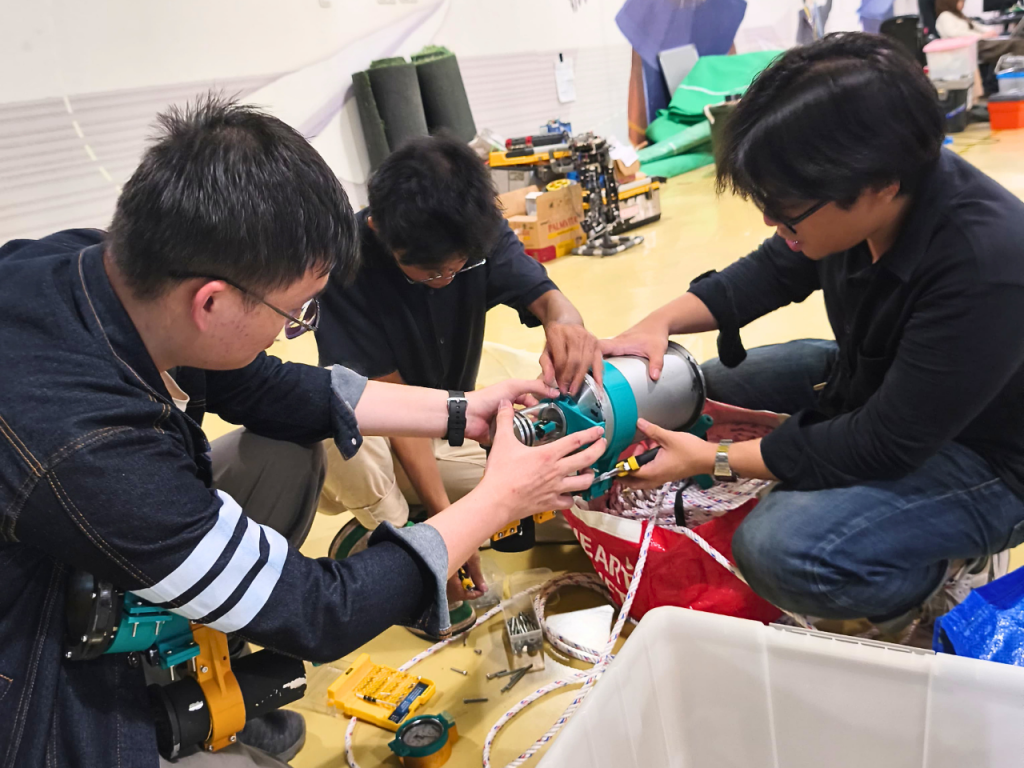
The prototyping process demanded extraordinary physical and mental endurance. They had to shuttle back and forth for material procurement, consult with testing technicians, and brave Bandung’s rainstorms. On the electrical front, challenges surfaced in the form of trial-and-error while tinkering with microcomputers and sensors. Prior to deep-sea deployment, the fabricated housing was subjected to rigorous testing inside a pressure chamber (pressure simulation cylinder) as well as controlled testing at the ITB Saraga Pool to ensure cutting-edge quality control.
“Sometimes things did not succeed on the first try, requiring a great deal of trial and error. Yet precisely from those moments, we learned a lot,” Nicko expressed.
Conquering the Waves of the Thousand Islands and Menjangan Island
Following rigorous design and testing phases at the ITB Saraga Pool, the team reached the most anticipated yet most tense milestone: direct field testing at sea.
The first location was the Kepulauan Seribu, targeting visual documentation at a depth of approximately 80 meters.

“As mechanical engineering students who rarely experience field lectures, this was a deeply memorable experience. We had to perform troubleshooting and live monitoring aboard a rolling vessel amidst the open sea. The results were extraordinary; we successfully reached the deepest point and secured the desired subsea visual data,” Gravin recounted with enthusiasm.
The testing successfully met projected targets. The team managed to acquire visual documentation from the deepest locations in the area according to research specifications.
However, this success was not the ultimate destination. The primary target for BASSCAM’s development is operation at a depth of 200 meters.
Consequently, key learnings from the Thousand Islands served as vital preparation for developing the next generation prior to a second round of testing at Menjangan Island in the West Bali National Park.
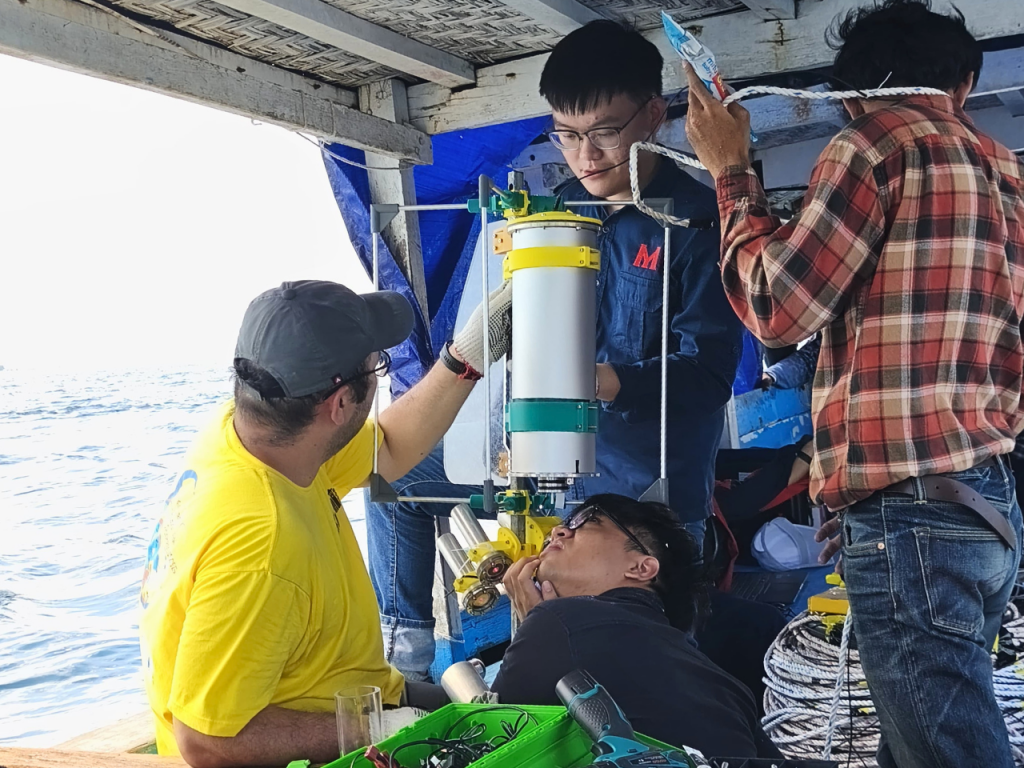
Unlike the initial test, oceanic conditions at Menjangan Island proved significantly more challenging. High waves and scorching weather made the testing process considerably more arduous than before.
“The second test provided a valuable lesson that engineering products do not become perfect overnight. A lengthy development process is required. Yet, those field challenges genuinely honed our problem-solving skills,” added Gravin.
He noted that BASSCAM was intentionally designed as a long-term development project so that subsequent generations of students could continuously pursue its refinement.
Fostering Optimism in Indonesia’s Technological Self-Reliance
For Gravin, the greatest achievement of this project was not merely successfully developing an underwater vehicle, but the emergence of the conviction that Indonesian students are capable of contributing to national technological independence.
“In my view, the most precious achievement lies in the birth of a new conviction that students hold immense opportunities to pave the way toward the nation’s technological self-reliance, one of which is through this underwater visual mapping innovation,” he stated.
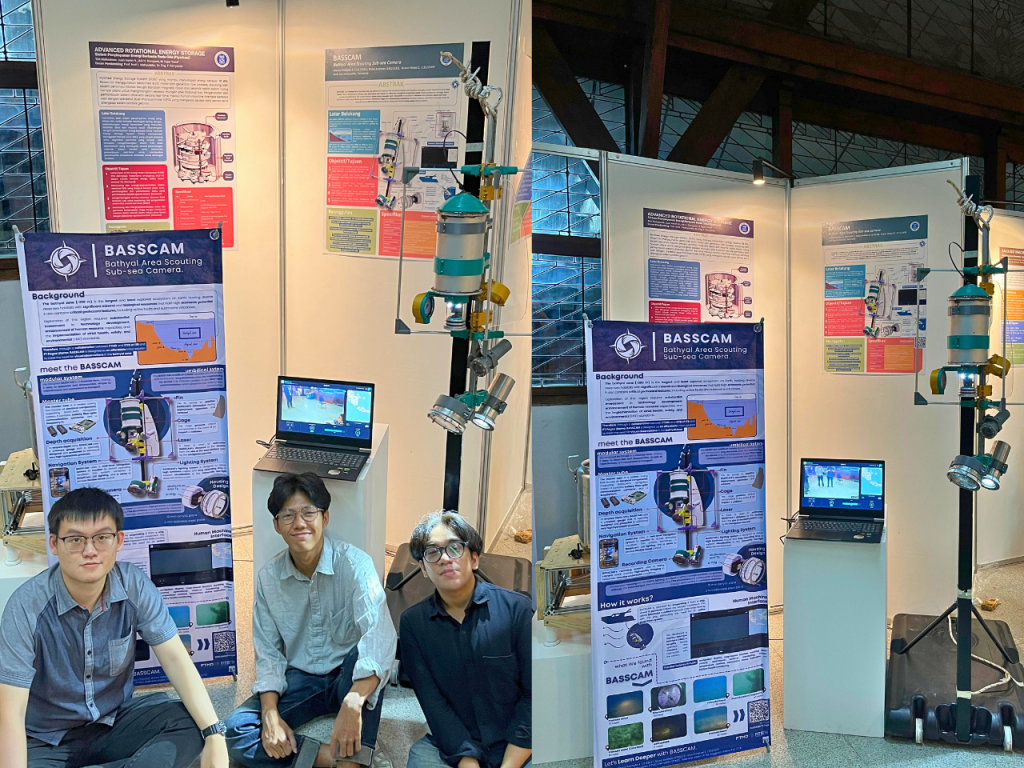
Through this project, the team also gained profound insights into the importance of cross-disciplinary collaboration. A geodesy expert may encounter specific challenges, but Mechanical Engineering students must be capable of translating those challenges into effective engineering solutions.
Beyond technical aptitude, they recognized the vital importance of critical thinking, communication, problem-solving, rapid learning capability, and teamwork when confronting field conditions that do not always align with simulation outputs.
Concluding the interview, Gravin urged FTMD students not to hesitate in seizing available opportunities throughout their academic journey.
“Research projects like BASSCAM represent one of the finest ways to implement the knowledge we have studied. Never be afraid to step out of your comfort zone and seize every opportunity available. FTMD ITB provides us with numerous opportunities, but individuals alone determine whether those opportunities are embraced or bypassed.”
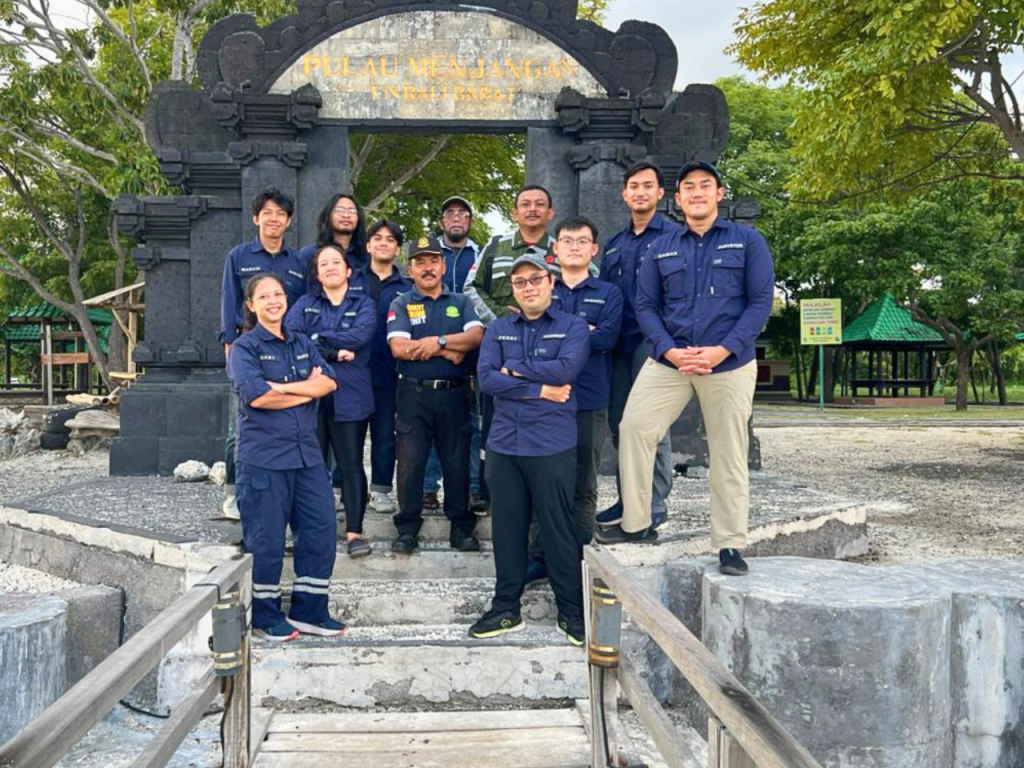
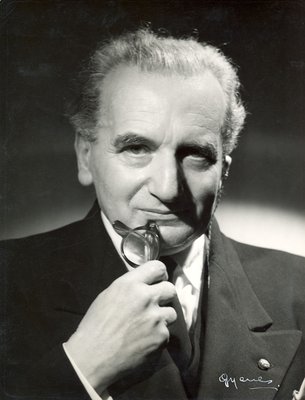
This spirit aligns with the quote by a world aerospace pioneer that inspired the team during BASSCAM’s development:
Through BASSCAM, FTMD ITB students demonstrated that knowledge acquired in classrooms can be materialized into tangible solutions for national needs. This innovation not only supports Indonesian marine research, but also marks an initial stride toward subsea technological self-reliance developed by the nation’s own youth.
#BASSCAM #FTMDITB #FITBITB #SDG4 #SDG9 #SDG14