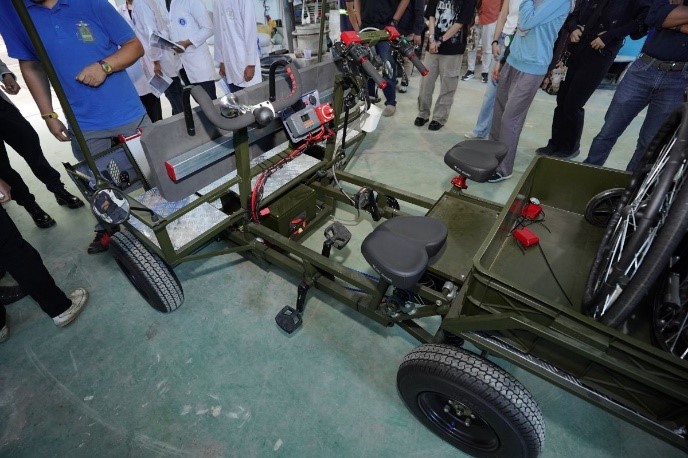
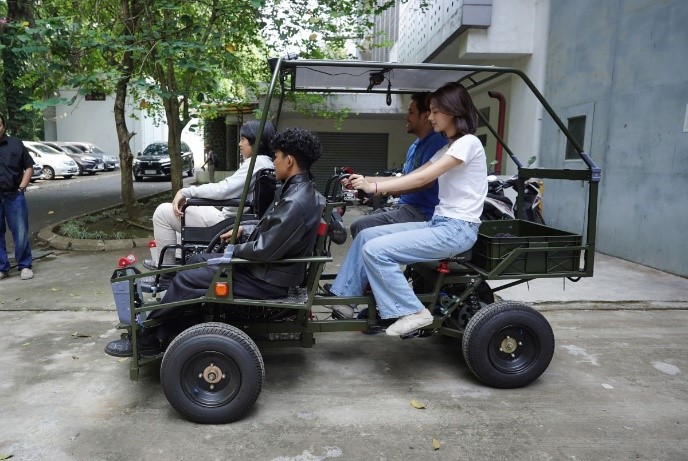
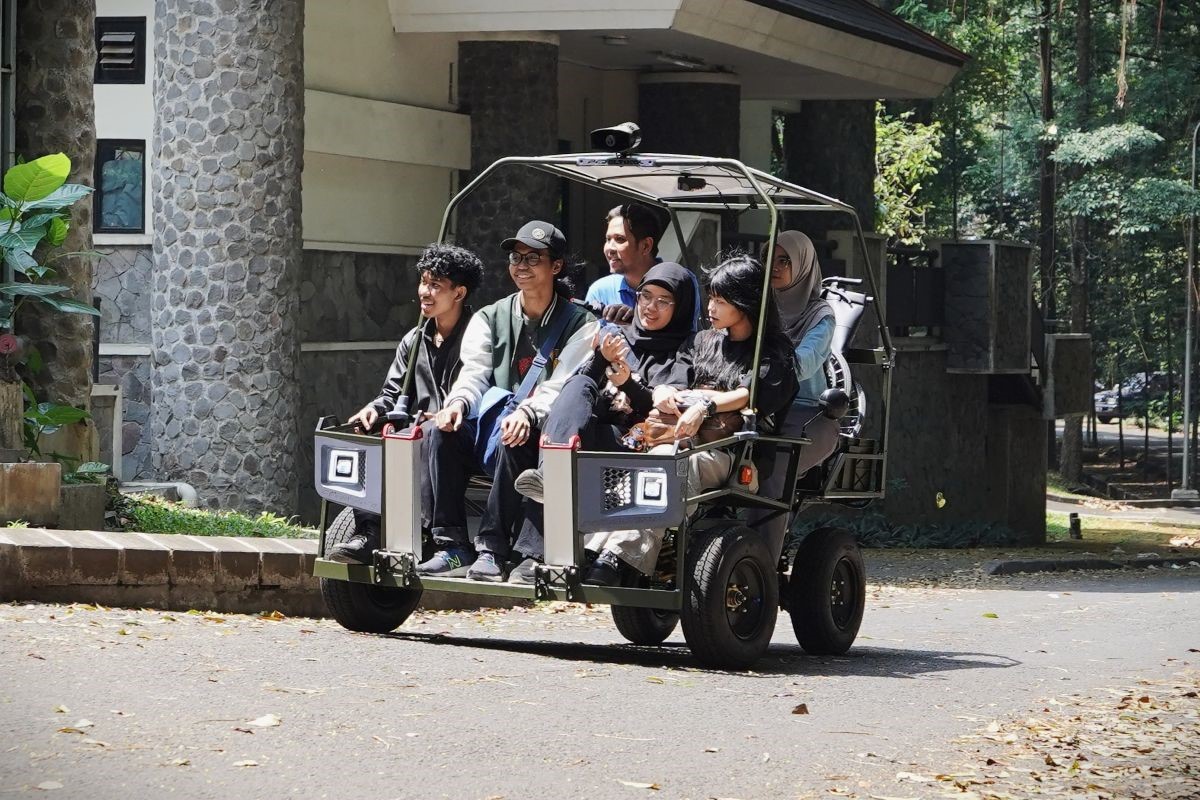
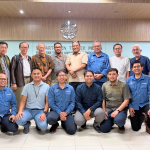
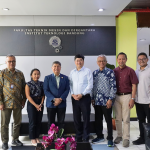
BANDUNG, ftmd.itb.ac.id – The Faculty of Mechanical and Aerospace Engineering (FTMD) Institut Teknologi Bandung (ITB) plays an active role in the development of Pedaltrax, a hybrid vehicle powered by human pedaling and an electric motor designed to support more eco-friendly and inclusive campus mobility. This innovation was developed through an interdisciplinary collaboration between FTMD ITB and the Product Design Study Program, Faculty of Arts and Design (FSRD) ITB, involving faculty members and students from initial design through prototype testing.

Pedaltrax was developed, in part, to address mobility needs at the ITB Jatinangor Campus, which features hilly terrain and several steep inclines. Student feedback gathered through the Introduction to Engineering and Design (PRD) course highlighted the need for a transportation medium capable of navigating such terrain, carrying cargo, and accommodating users with physical limitations or disabilities.

Photo: itb.ac.id
Photo: itb.ac.id

The collaboration in developing Pedaltrax brings together expertise in product design and mechanical engineering. From FTMD ITB, development was coordinated by Ir. M. Agus Kariem, S.T., M.T., Ph.D., focusing on technical reliability, vehicle dynamics, structural chassis integrity, and transmission system efficiency. This role complemented the development of design, ergonomics, and user experience led by the FSRD ITB team.

From a design perspective, the development of Pedaltrax began by mapping user needs and was further carried out through the Mobility Design course in the Product Design Study Program. Students participated in digital modeling, ergonomic simulations, and full-scale prototype evaluations. This approach positioned students not merely as users, but as active participants in developing mobility solutions.

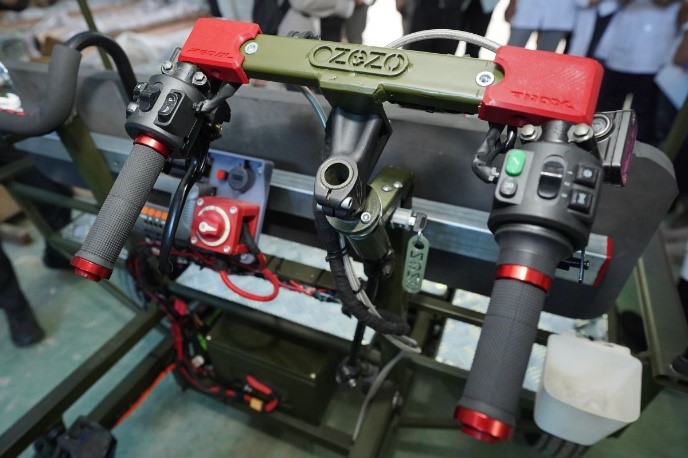
Photo: itb.ac.id

Technically, Pedaltrax utilizes a hybrid drive system that combines human pedaling power with electric motor assistance. On flat terrain, the vehicle can be propelled by pedaling, while the electric motor provides assistance when facing inclines. The system utilizes a 3,000-Watt BLDC motor, a 72-Volt 45 Ah battery, and a 2:1 mechanical reduction system. Based on initial developer estimates, the vehicle’s range is approximately 60–80 kilometers on a single charge, depending on terrain and usage patterns.

Pedaltrax is also equipped with a 120 Wp solar panel connected to a Maximum Power Point Tracking (MPPT) system to assist in charging the battery. Beyond supporting renewable energy utilization, the vehicle system is designed modularly so that various components can be further developed and integrated to support future research needs.

Photo: itb.ac.id
Photo: itb.ac.id

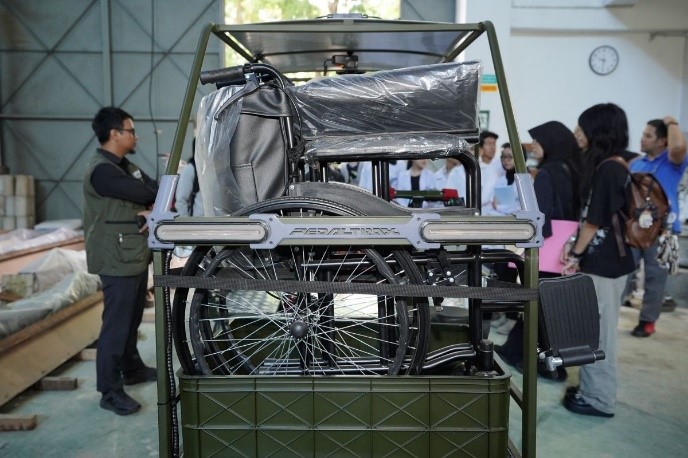
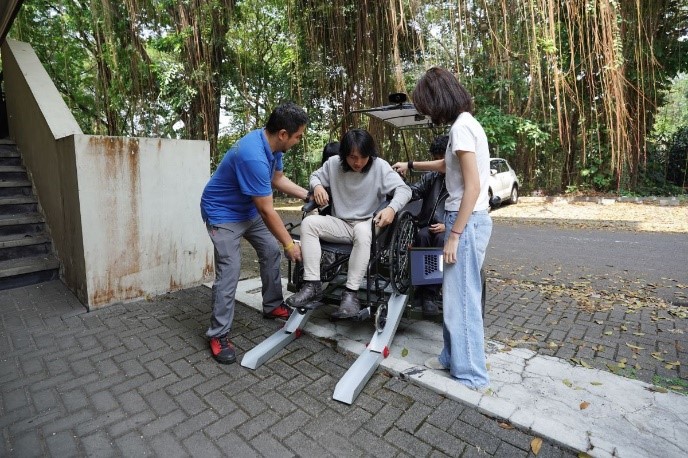
Inclusivity is another key aspect of Pedaltrax’s design. The vehicle features a compartment for transporting goods and provides access for wheelchair users. A low-floor structure was designed to facilitate entry and exit for users with accessibility needs.

The development of Pedaltrax progressed in stages throughout 2026, starting from user requirements analysis and concept design, technical engineering and CAD modeling, to fabrication and prototype testing. The process utilized manufacturing facilities within FSRD and FTMD, directly connecting academic activities with real-world product development.

The Pedaltrax prototype was reviewed directly by the Rector of ITB, Prof. Dr. Ir. Tatacipta Dirgantara, M.T., who observed operational demonstrations of the vehicle and inspected its functional features. The review underscored the importance of advancing student and faculty works beyond academic assignments or prototypes, ensuring they serve real needs within the campus environment and society.