FTMD ITB Mechanical Engineering Students Win 1st Place Nationally Through B50 Fuel System Innovation for Ships
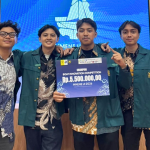
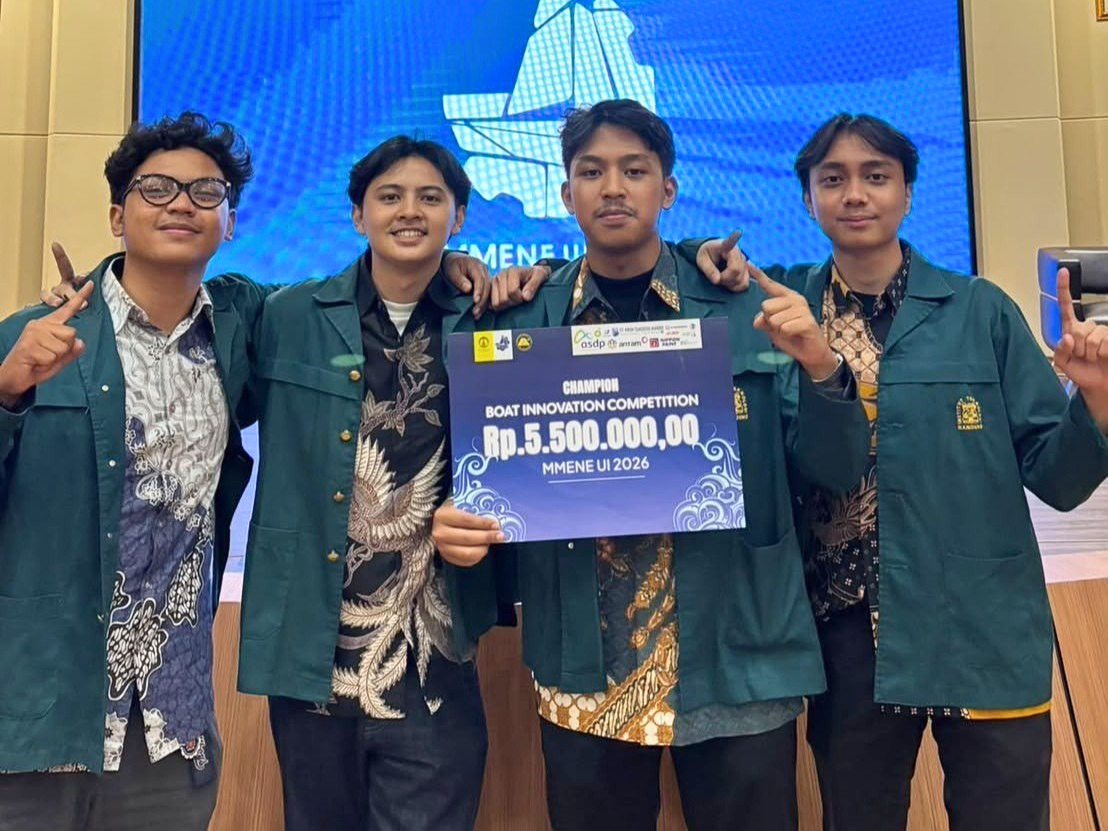
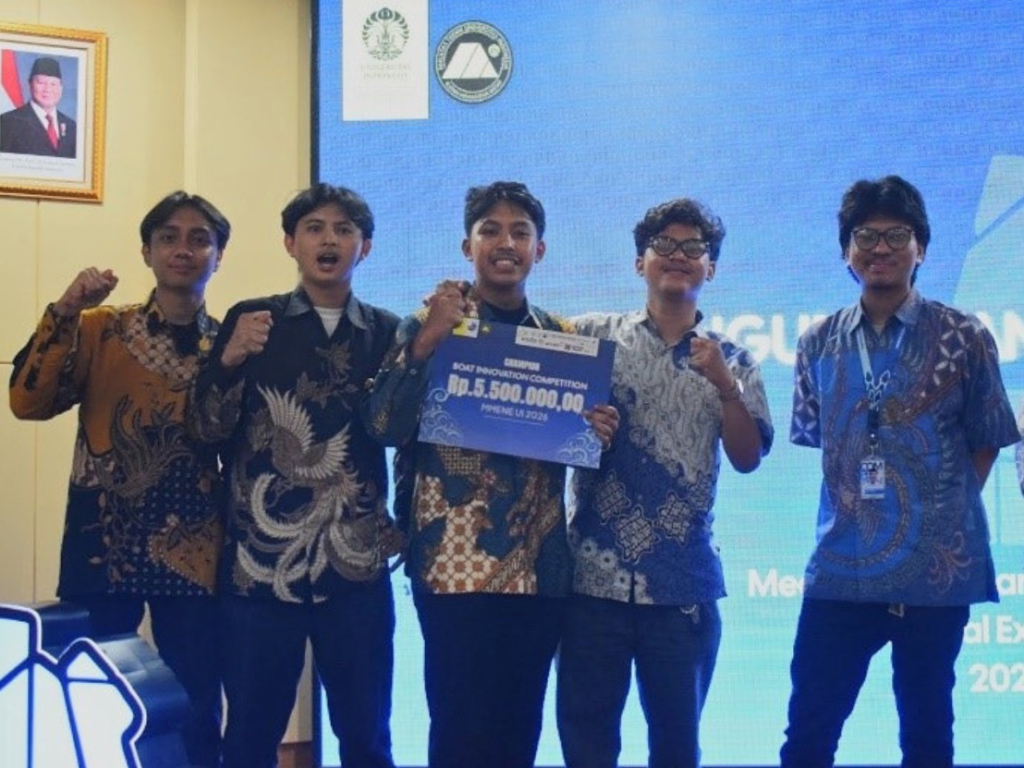
DEPOK, ftmd.itb.ac.id – Four undergraduate students from the Mechanical Engineering Study Program, Faculty of Mechanical and Aerospace Engineering (FTMD) Institut Teknologi Bandung (ITB), achieved 1st Place Nationally in the Boat Innovation Competition (BIC) category at the Mechanical and Marine Engineering National Exposition (MMENE) UI 2026, held at Universitas Indonesia, Depok, on Saturday (October 24, 2026).
This achievement was earned through an innovative quality control system design for B50 biodiesel fuel on ferry vessels. The innovation is engineered to help ships adapt to B50 utilization without undergoing dry-docking or entering shipyards, thereby minimizing potential operational disruptions.
The team, competing under the name Top 1 Dinamika Jatiwaringin, consists of Kresno Bayu Aditya Seno, Arvy Fadhil Firansyah, Ananda Ghibran Fadlilah, and Haroki Taqiyyudin Robbani. All four are Mechanical Engineering students from the class of 2023 at FTMD ITB.
Designing the B50 Fuel Quality Control System
In the competition, the team developed the design of a Fuel Contamination Control Unit (FCCU), a system engineered to separate contaminants and maintain fuel quality aboard the KMP Portlink VII, which serves the Ketapang–Gilimanuk ferry route.
The system is designed to support B50 biodiesel, a fuel blend consisting of 50 percent plant-based biodiesel and 50 percent conventional diesel. Implementing B50 in maritime vessels poses distinct challenges, particularly regarding potential water content, oxidation during storage, and sediment buildup that can cause filter clogging and impair engine performance.
To address these challenges, the team engineered the FCCU with several control mechanisms, including water and contaminant particle separation, a redundant filtration system, and managed fuel storage protocols. This design aims to preserve fuel quality while mitigating the risk of engine system failures.
A key advantage of the FCCU is its retrofit approach, allowing the system to be installed on operational ships without replacing the entire existing fuel architecture. With this method, installation can be scheduled during routine berthing times, eliminating the need to interrupt sailing schedules for dry-docking.
Applying Engineering and Simulation in Innovation Development
Throughout the design process, the students applied various engineering methodologies acquired during their studies in Mechanical Engineering at FTMD ITB. The workflow encompassed three-dimensional modeling using SolidWorks, Computational Fluid Dynamics (CFD) simulations to analyze fuel flow dynamics, and Failure Mode and Effects Analysis (FMEA) to assess potential system failure risks.
The team also conducted technical and economic feasibility analyses using Python alongside Monte Carlo simulations. Based on calculations and design simulations, the FCCU design is projected to reduce the fuel system failure risk score by up to 71 percent, with an estimated investment of approximately IDR 707 million and a payback period of 5.9 years under the base-case scenario. These figures represent design projections rather than direct on-ship testing results.
One of the primary challenges encountered by the team was the limited availability of ship technical data. To overcome this obstacle, they utilized accessible technical documentation, formulated measured design assumptions, and evaluated multiple operational scenarios to ensure the design remains robust and accountable.
Toward Further Development and Field Testing
Moving forward, the team hopes to advance the FCCU design through direct site surveys on KMP Portlink VII and prototype testing using actual B50 biodiesel samples. These subsequent stages are essential for evaluating system performance under live conditions before considering broader implementation.
This achievement highlights the capability of FTMD ITB students to integrate academic knowledge, engineering analysis, and practical problem-solving to deliver innovations pertinent to industry needs. Through the development of the FCCU, the team offers a technological approach to support the maritime transport sector’s readiness during the transition toward higher biodiesel fuel blends.
This accomplishment serves as an encouragement for FTMD ITB students to continuously foster creativity, technical rigor, and collaboration in generating engineering solutions that benefit both industry and society.
#SDG# #SDG4 #SDG7 #SDG9 #SDG17